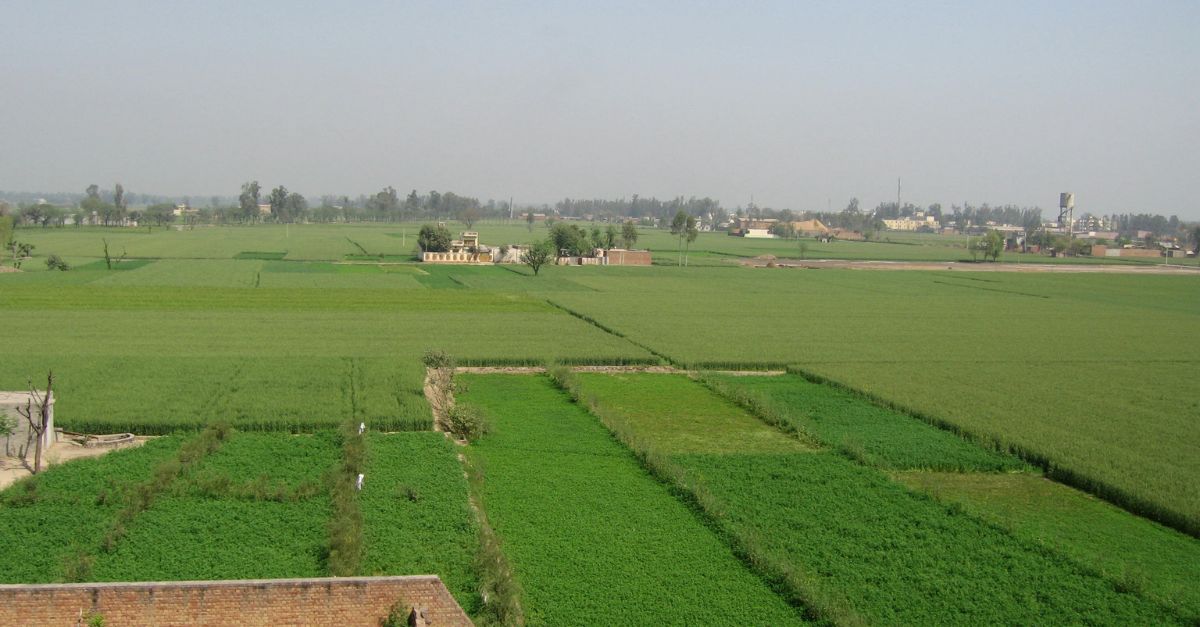

For our agrarian country, the suicides of farmers and agricultural laborers are a shameful situation. In a single year, more than ten thousand farmers and agricultural laborers have taken the extreme step of suicide.
According to data published by the environmental organization Centre for Science and Environment, in 2021, 10,881 people associated with the agricultural sector died by suicide. This means that in 2021, the number of people committing suicide daily was around thirty. The death toll in this single year is the highest in the last five years.
While the country was battling the global COVID crisis, this was certainly a challenging time. At the same time, farmers stood in protest against the three agricultural reforms introduced by the central government. In 2021, Maharashtra recorded the highest number, with 4,064 farmers and agricultural laborers committing suicide, which is noteworthy. This was followed by Karnataka with 2,169 and Madhya Pradesh in third place with 671. In Punjab and Haryana, the number of farmer and agricultural laborer suicides was 270 and 226 respectively. Earlier, in 2016, about 11,379 people related to agriculture had committed suicide.
After a decline in these numbers in previous years, why did the suicide rate rise again in 2021—this must become a matter of concern for us. In fact, one of the major reasons for this increase is the decline in food grain production due to unpredictable climate changes in recent times. Moreover, pest attacks on crops and the fall in market prices of agricultural produce, along with rising input and farming costs, have made farming increasingly difficult. Farmers are not even getting the benefit of Minimum Support Prices, yet the government continues to beat the drum of doubling farmers’ income. Farmers often take loans to recover their losses and then get trapped in a cycle of debt. The humiliation and harassment by moneylenders and middlemen, along with depression, make suicide seem like the only option for them.
Today, farming has become a loss-making occupation for farmers. As a result, either farmers are committing suicide or their children are leaving agriculture in search of a better future. In such a situation, it is natural to question what happened to the central government’s promise of doubling farmers’ income. Today, there is an urgent need to implement policies that ensure farmers receive fair prices for their produce. It is unfortunate that we are unable to protect the lives of the food providers who contribute significantly to the country’s food security through their hard work.
There is a need for a practical evaluation of why the policies announced by various governments to increase farmers’ income are not reaching them in reality. Helping farmers cope with the harmful effects of global warming on crops at all levels is the biggest challenge. Efforts must be made to boost farmers’ morale. Along with this, there is a need to diversify crops to protect them from excessive rainfall and to increase production. Improved seed varieties must be developed that can provide sufficient productivity even with less water and higher temperatures. For this, agricultural scientists and agricultural universities must work on a war footing. Otherwise, not only will farmers suffer huge losses, but the country’s food security could also be at risk.
The reality is that a farmer or agricultural laborer embraces death only when all doors seem closed for them. In resolving this, the role of the government, society, and voluntary organizations becomes crucial. And now, even before the start of the summer season, reports of water scarcity in many parts of the country indicate an alarming situation. The latest data from the Central Water Commission clearly shows the severity of the growing water crisis in India. The data indicates a worrying decline in water levels in reservoirs across the country. According to the report, by April, the water available in major reservoirs across the country has decreased by about thirty percent of their storage capacity. This is a significant drop compared to recent years and points toward drought-like conditions. It is being said that the root cause of this is the El Niño phenomenon.
In reality, the decline in water storage is due to insufficient rainfall over a long period. As a result, drought-like and insecure conditions have emerged in many areas. In fact, people in the eastern and southern parts of India are facing this crisis. Moreover, due to continuously rising temperatures, groundwater levels are rapidly decreasing. Due to its severe impact, water scarcity has become serious in states like Andhra Pradesh, Karnataka, and Tamil Nadu. The country’s IT hub, Bengaluru, is facing a severe water crisis, which is affecting not only agriculture but also daily life. Its impact goes beyond immediate concerns.
We must accept that the agricultural sector, considered the backbone of the country’s economy, is currently facing many complex challenges. These are adversely affecting various crops. One of the reasons is that even today, half of the country’s cultivable land depends on monsoon rains. In such a situation, the future of agriculture depends entirely on the normalcy of the monsoon. In this context, the meteorological department’s forecast of a normal monsoon brings hope but can also create uncertainty.
In such circumstances, to face any impending crisis, there is a need to intensify water conservation efforts from households to all agricultural practices and industrial activities. There is also a pressing need for large investments in water infrastructure and management systems to improve water storage and distribution efficiency.
Along with improving agricultural practices, efforts should be made to reduce water usage through crop diversification so that the effects of drought can be minimized. At the same time, there is a need to promote traditional water conservation techniques. Moreover, awareness campaigns should be conducted to encourage people to use this precious natural resource wisely. Undoubtedly, there is an urgent need to recognize the dangers of the impending water crisis and take swift and decisive steps to secure the future of coming generations