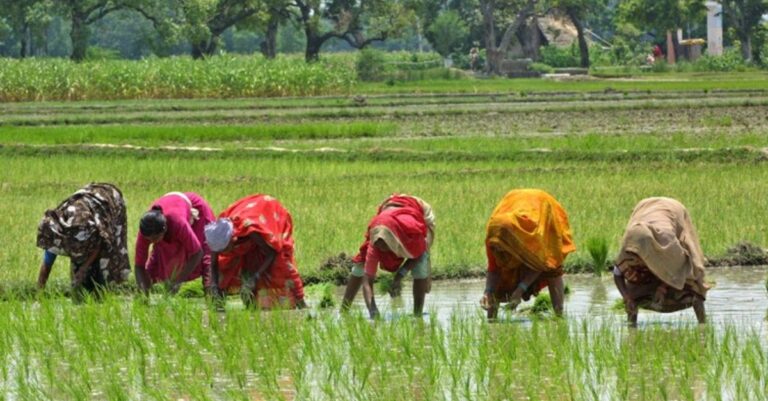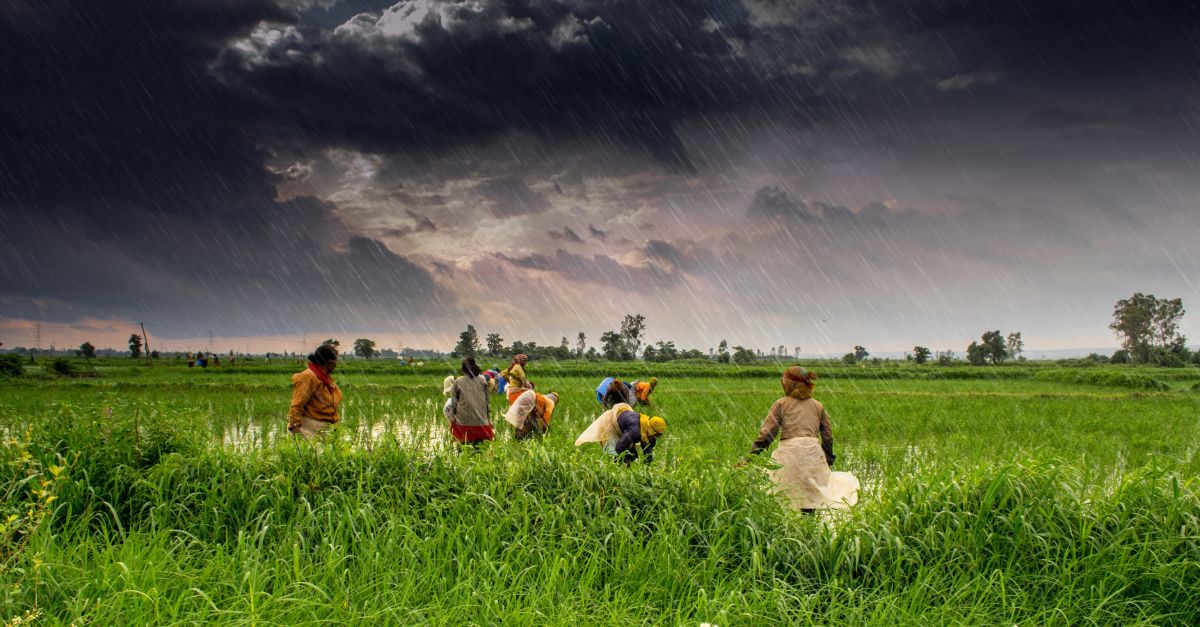

The farmer in India is not merely a food provider; he is the soul of this nation. For centuries, enduring natural calamities, burdened by debt generation after generation, yet remaining loyal to the soil, this community today finds itself trapped in a different kind of crisis.
In February 2016, the Modi government launched the Pradhan Mantri Fasal Bima Yojana (PMFBY) with the stated objective of freeing farmers from the shackles of debt. It was an ambitious attempt to provide a strong safety shield to farmers repeatedly devastated by excessive rainfall, drought, and hailstorms. However, as the scheme completes ten years today, an unsettling reality has emerged. The question is now being openly asked: has a scheme initiated for the welfare of farmers turned into a profit mine for insurance companies?
If one examines the mathematics of the scheme, the figures are startling. In just three years, insurance companies collected a massive ₹82,015 crore in premiums. During the same period, farmers received only ₹34,799 crore as compensation for crop losses. This means insurance companies earned a net profit of over ₹47,000 crore. Where did this money come from? It came from the sweat and toil of farmers and from subsidies provided by the central and state governments in other words, from the pockets of ordinary taxpayers. When such a stark imbalance between premiums and claims emerges, every taxpayer and every farmer has the full right to demand accountability.
The ground reality is even more distressing. For example, in certain parts of Haryana, farmers staged protests against the rejection of their insurance claims and the prolonged delays in settlement. On one hand, the farmer’s crop lies destroyed and his household stands shattered; on the other, insurance company representatives entangle him in a labyrinth of paperwork. Numerous allegations of irregularities have surfaced in the implementation of the scheme. Fake applications and fraudulent bank accounts have reportedly been used by certain elements to misuse the scheme. When corruption allegations plague such a program, it becomes difficult even to imagine how much of the intended benefit actually reaches genuine farmers.
On the technological front, however, there are some positive aspects. The scheme has attempted to incorporate satellite imagery, drone technology, and computerized yield estimation systems. Measures such as digital identification for 84.8 crore farmers, geo-referenced crop surveys, and direct benefit transfer can potentially enhance transparency. Yet technology is merely a tool, not the objective. Without political will and honest implementation, even the best technology proves ineffective. The true success of this scheme lies in ensuring that when a farmer’s crop fails, he receives swift and fair compensation and that goal remains far from fully realized.
Looking beyond the crop insurance scheme to the broader debt crisis facing farmers, the situation appears even more alarming. A recently published report has revealed a shocking reality: farmers in Punjab and Haryana the very states that led the Green Revolution are among the most indebted in the country.
In Punjab, the average outstanding debt per agricultural household stands at ₹2.03 lakh, while in Haryana it is ₹1.83 lakh. When the national average is ₹74,121, the severity of the situation in these two states becomes evident. Only Andhra Pradesh and Kerala report higher debt levels. Notably, states like Nagaland, Meghalaya, and Arunachal Pradesh have negligible agricultural debt. This contrast exposes deep structural imbalances within Indian agriculture.
To understand why prosperous agricultural states like Punjab and Haryana bear such heavy debt burdens, one must revisit the history of the Green Revolution. These states safeguarded India’s food security and rescued the nation from the humiliation of foodgrain imports. However, the price of this success has been borne by their farmers. Rising input costs, stagnant farm incomes, small and fragmented landholdings, erratic monsoons, delays in procurement processes, and escalating household expenses together have created a vicious cycle that is now extremely difficult to break. Easy access to institutional credit may enhance productivity, but it also normalizes indebtedness as a way of life. Once this cycle begins, it rarely ends easily.
The central government asserts that it is continuously working in farmers’ interests. The Reserve Bank’s proposed reform of linking loan tenure under the Kisan Credit Card scheme to crop cycles is a welcome step. The use of digital technology for direct benefit transfers and simplifying credit access are certainly useful measures. However, these steps alone cannot uproot the deeply entrenched debt crisis. The harsh truth is that unless farm incomes rise proportionately with production costs, unless crop diversification becomes a practical reality, and unless the intensifying crisis of climate change is addressed, the vicious cycle of debt will persist. No matter how efficiently debt is managed, it will not liberate farmers from the trap.
Beyond these challenges lies an even broader global crisis that will directly impact Indian farmers. A new report by the EAT-Lancet Commission observes that nearly 30 percent of global greenhouse gas emissions are attributable to food systems, and food production alone transgresses five of the six planetary boundaries. Animal-based food products contribute the most to agricultural emissions, while cereals lead in nitrogen, phosphorus, and water use. Current agricultural practices have pushed global nitrogen levels to more than double the safe limit. This is not merely an environmental concern; it is a question of survival for future generations.
In the Indian context, the report notes that cereal-based diets remain dominant. To ensure sustainable food security by 2050, greater inclusion of vegetables, fruits, nuts, and legumes will be necessary. However, such a shift could increase the prices of many food items, making them unaffordable for already economically stressed families. Moreover, dietary changes are never simple.
In India, food culture is deeply intertwined with religion, caste, regional traditions, and economic realities. Therefore, reducing harmful chemical inputs through new standards, making minimally processed foods affordable for the masses, and prioritizing regionally familiar and affordable foods through government procurement may be more practical approaches. Without curbing excessive groundwater extraction, preventing soil erosion, and reducing agriculture’s dependence on fossil fuels, long-term sustainable farming will remain impossible.
The Commission also issues a strong warning: weak systems that fail to curb market monopolies, labor exploitation, and environmental damage along with the undue influence of giant corporate companies may become the biggest obstacles to meaningful change. Small farmers and agricultural laborers must be granted collective bargaining rights, and regulatory processes must genuinely represent consumers and farmers. These protections currently exist largely on paper; their implementation is urgently needed.
So what is the way forward? Regarding reforms in PMFBY, strict and transparent auditing of insurance companies’ performance is essential. The regulatory framework must be strengthened to maintain a fair ratio between premiums and claims. Ensuring impartial competition in the insurance sector could benefit farmers. Most importantly, claims must be settled swiftly. It is unjust to make farmers wait for months after suffering losses. Increasing farmers’ participation in the scheme’s processes is crucial, as true knowledge of agriculture resides with the farmer himself. Without incorporating his experience, the scheme can never be truly grounded in reality.
On the issue of debt, merely facilitating easier credit is insufficient. Unless the income cost ratio improves, the vicious debt cycle will never end. Crop diversification, timely assurance of minimum support prices, and simplified procurement processes must move beyond announcements and translate into action. Reviving traditional farming practices, conserving groundwater, and promoting organic agriculture are the needs of the hour. To confront the escalating crisis of climate change, these measures must be implemented collectively and comprehensively.
Today, PMFBY stands at a critical crossroads. It must be acknowledged that the scheme has yet to fully achieve the purpose for which it was introduced. Safeguarding the interests of insurance companies while relegating farmers’ interests to the background does not befit a democracy. A scheme funded by public money must primarily benefit the public particularly farmers. Only through transparent auditing, swift claim settlements, strict oversight of insurance companies, and greater farmer representation can the true spirit of the scheme be revived and trust restored.
As Mahatma Gandhi said, the soul of India resides in its villages and its agriculture. Protecting that soul is a moral responsibility shared by the central government, state governments, and society at large. “Prosperous farmers mean a prosperous nation” must not remain a mere slogan; it must be reflected in every policy and every decision. Only then will India’s food provider truly be secure and live with dignity.