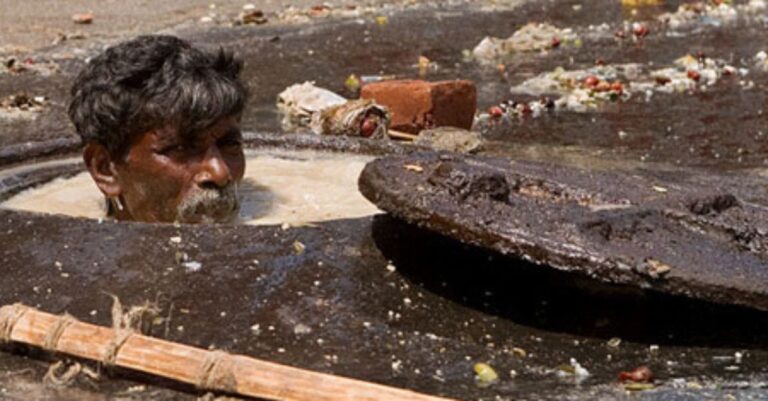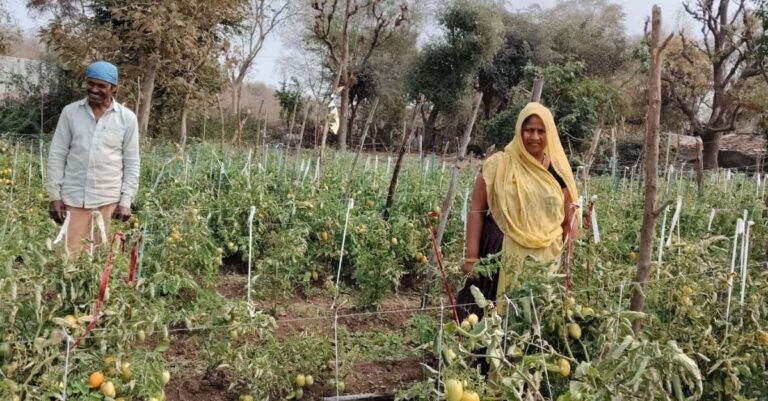

To understand farmer suicides, it is essential to analyze their root causes. In the context of Maharashtra, this becomes particularly important. In 1990, P. Sainath, the rural editor of the English newspaper The Hindu, reported regular incidents of farmer suicides. Initially, these reports emerged from Maharashtra, and soon similar reports began coming from Andhra Pradesh. At first, it was believed that most of these suicides were committed by cotton-growing farmers in the Vidarbha region of Maharashtra. However, data obtained from the State Crime Records Bureau in 2010 made it clear that suicides were widespread among farmers cultivating not only cotton but also other cash crops across the entire state. These suicides were not limited to small farmers; medium and large farmers were also affected.
To investigate this crisis, the state government constituted several inquiry committees. The then Prime Minister, Manmohan Singh, announced a relief package of ₹110 billion for farmers in Vidarbha to be spent by the state government. Subsequently, due to the ongoing agrarian crisis, farmer suicides were reported in Maharashtra, Karnataka, Kerala, Andhra Pradesh, Punjab, Madhya Pradesh, and Chhattisgarh. In this context, in 2009, India’s National Crime Records Bureau recorded 17,368 farmer suicides. The highest numbers were reported from Maharashtra, Karnataka, Andhra Pradesh, Madhya Pradesh, and Chhattisgarh, which together accounted for 10,765 suicides, or 62% of the total.
In Maharashtra, between January 1 and December 31, 2024, a total of 276 farmers from Vidarbha and Marathwada reportedly died by suicide, as acknowledged by the state’s Relief and Rehabilitation Minister Makarand Patil. In the Amravati division, 169 cases were reported, while in the Chhatrapati Sambhajinagar division, 952 farmers died due to factors such as climate change, wet and dry droughts, crop failure, and indebtedness. This information was provided by Minister Patil in a written reply to a starred question in the legislative assembly. A shocking set of figures further revealed that in the same period, a total of 2,706 farmers in Vidarbha and Marathwada died by suicide. Of these, 1,563 cases were declared eligible for compensation, while in 101 cases, the heirs of the deceased farmers received financial assistance of ₹30,000 through direct aid and ₹70,000 through a bank monthly income scheme, totaling ₹1 lakh per family.
Data from the past decade indicates that, on average, around 3,000 farmers die by suicide every year in Maharashtra. In 2020 alone, 2,270 farmers died by suicide, according to information provided by the state’s Relief and Rehabilitation Department under the Right to Information Act. While releasing these figures, the department claimed that except for the Nagpur and Nashik divisions, all other regions witnessed a decline in farmer suicides in 2020. Vidarbha, however, continues to be identified as a hotspot for such tragedies. Although financial assistance is provided to families after such incidents, there is little focus on identifying and addressing the root causes before these tragedies occur. In reality, a large population in Vidarbha depends entirely on agriculture, making it their only means of livelihood. In other words, they have no alternative. With 91% of agriculture in the region dependent on monsoon rains, the uncertainty of rainfall directly impacts their lives.
However, the crisis in Vidarbha is not solely due to monsoon dependency; it is also linked to government policies, rising costs, and the neglect of farmers’ issues by political leadership. Furthermore, there is a lack of reliable institutional credit systems, forcing farmers to rely on private moneylenders. The crisis is also closely associated with unseasonal rainfall and the high-cost cultivation of cash crops like cotton. The recent agricultural losses further highlight this issue. Vidarbha is one of Maharashtra’s leading cotton-producing regions, yet last year, farmers growing Kharif crops suffered losses of up to 60%, severely disrupting their financial stability and affecting future cropping cycles.
Yavatmal district in Vidarbha is particularly known for cotton production, but like other districts in the region, it has gained notoriety for farmer suicides over the past several years. Farmers here have been trapped in a cycle of agrarian distress for decades, unable to escape it. Despite these hardships, they continue to sow their fields every year in the hope of a better yield.
The question arises: how much does a cotton farmer in Vidarbha spend per acre each year in the hope of a good harvest? The process begins with leveling the land, followed by clearing debris and purchasing seeds, fertilizers, and pesticides. Farmers then hire laborers for sowing. Cotton requires irrigation at specific intervals, and once the crop is ready, it must be graded. After all these efforts, when farmers bring their produce to the market, they face further challenges in selling it. Even after months of hard work and spending thousands of rupees, small farmers often fail to receive fair prices for their produce. This year, delays in procurement at government cotton purchase centers forced many farmers to sell their cotton to traders at rates of ₹5,300 to ₹5,400 per quintal.
Cotton remains the most widely cultivated Kharif crop in the region. Farmers report that they spend approximately ₹36,000 per acre on cotton cultivation each year. This includes ₹1,000 for land leveling, ₹500 for cleaning, ₹750 for seeds, ₹100 for sowing, ₹5,000 for fertilizers, ₹5,000 for herbicides, ₹5,000 for pesticides, ₹10,000 for irrigation, ₹4,000 for cotton grading, ₹2,000 for transportation, and ₹1,000 for watch and ward. Despite such high investments, unpredictable weather often destroys crops. Heavy rainfall at critical stages leads to yields dropping to less than half, resulting in severe losses. Continuous losses mean that farmers are increasingly burdened by debt.
Data from the past two years also shows that the Amravati division in Vidarbha recorded the highest number of farmer suicides, with 1,893 cases. Yavatmal district alone accounted for 295 of these cases. The Aurangabad division in Marathwada ranked second, with 1,528 suicides. Nashik and Nagpur divisions followed, recording 774 and 456 cases respectively, with an increase compared to 2019. The state’s Relief and Rehabilitation Department attributes a decline in suicides in 2020 to measures such as loan waivers introduced by the Maha Vikas Aghadi government, as well as relief in land revenue and electricity bills during natural disasters.
Indian agriculture is largely dependent on the monsoon, and crop losses due to monsoon failure are considered a major cause of farmer suicides. Situations such as drought, rising costs, and mounting debt create a vicious cycle of distress. Farmers often become trapped in networks involving banks, moneylenders, and intermediaries. One of the main reasons pushing farmers toward suicide is that agriculture is no longer economically viable or capable of sustaining livelihoods. The reasons behind declining profitability include shrinking landholdings—from an average of 2.3 hectares in 1960–61 to 1.6 hectares in 2002–03—and rising expenses alongside income. Although farmers’ incomes have increased, their expenditures and debt burdens have grown even faster. As incomes rise, households are also spending more on non-food items, while the reduction in landholding size remains a major concern.
The All-India Rural Financial Inclusion Survey (NAFIS) 2021–22 conducted by the National Bank for Agriculture and Rural Development (NABARD), based on a sample of one lakh rural households, provides further insights into the post-COVID economic condition. According to the survey, the average landholding of farmers declined from 1.08 hectares in 2016–17 to 0.74 hectares in 2021–22, marking a 31% reduction in just five years. Meanwhile, average monthly household income increased from ₹8,059 to ₹12,698, a rise of 57.6%. However, monthly expenditure also rose significantly from ₹6,646 to ₹11,262, an increase of 69.4%.
The share of expenditure on food declined from 51% to 47%, indicating a shift toward non-food expenses, which may raise concerns about food security. At the same time, the proportion of indebted households increased from 47.4% to 52%, highlighting growing financial stress. The percentage of households with outstanding loans also rose, suggesting a greater dependence on borrowing to meet expenses.
Farmers are increasingly relying on institutional credit. The proportion of households accessing formal credit rose from 60.5% to 75.5%. The expansion of the Kisan Credit Card (KCC) scheme has been significant, with coverage increasing from 10.5% in 2016–17 to 44.1% in 2021–22. Pension coverage has also risen from 18.9% to 23.5%, while insurance coverage has increased dramatically from 25.5% to 80.3%, reflecting a shift toward financial security mechanisms.
Financial literacy has improved considerably, rising from 33.9% to 51.3%. About 72.8% of households now manage their finances effectively and pay bills on time, compared to 56.4% earlier. Savings have also increased, with average savings rising from ₹9,104 to ₹13,209, and the proportion of households saving increasing from 50.6% to 66%.
Overall, the survey shows that while incomes in rural India have increased, so have expenditures and debt burdens. The use of institutional financial services has expanded, and schemes like KCC, pensions, and insurance are being widely adopted. However, shrinking landholdings and rising financial responsibilities remain major challenges for the future. Since economic liberalization, agricultural practices—especially cash crop farming—have undergone significant changes. Due to socio-economic constraints, many farmers lack the technical knowledge required for cultivating such crops. As a result, those engaged in capital-intensive crops like Bt cotton are more vulnerable to indebtedness and agrarian distress