
Before coming to the main theme, I feel it is imperative to tell a story by Begum Rokeya. She often used to tell this story to her students. The story goes like this:
“Satan used to send his disciples to enter human minds and make people commit crimes. When they returned, they would report their deeds. One said he had entered the minds of four people and made them commit murder. Another said he had entered eight people and made them commit robbery. In this way, the disciples kept recounting their crimes, and Satan kept nodding in approval.
Finally, one disciple said that he had made a student forget his lessons. At this, Satan embraced him and started kissing him. Seeing this, the others were astonished and said, ‘We made people commit such grave crimes, and you only nodded. But when he says he merely made a student forget his studies, you shower him with affection! What kind of justice is this?’
Satan replied, ‘Fools! Don’t you understand? The greatest crime in society is depriving someone of education.’”
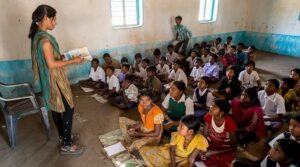
Historical Deprivation of Education
The people of this country have historically been deprived of genuine education. Before discussing the present educational crisis, it is necessary to briefly touch upon the history of the education system in our land.
Before British rule, education was not a right for all. Only people of the upper castes had access to education. To render skill and competence useless, Dronacharya demanded Ekalavya’s thumb as guru-dakshina in the Mahabharata. Though symbolic, this single episode points clearly to the denial of education to the Shudras. Not only martial training but even scriptural knowledge was denied to them.
To maintain exploitative rule and dominance, the upper castes used scriptures authored by themselves to deprive lower-caste people of education and other basic social rights for centuries. As a result, the caste system—rooted in private ownership and exploitation—remained intact.
Education Under British Rule
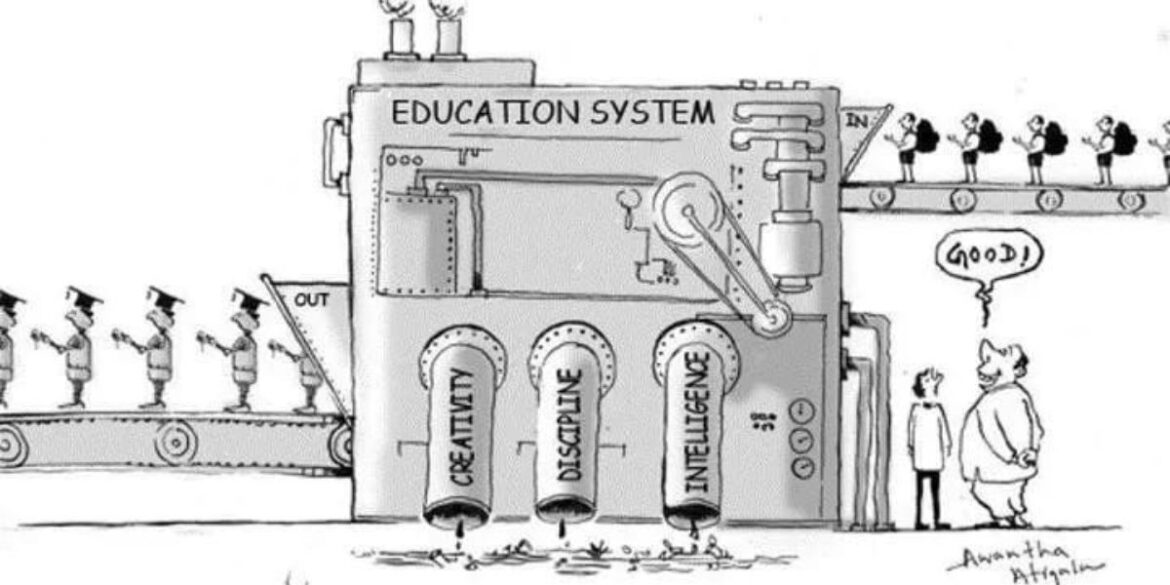
After the British arrived, education was made accessible to all castes, driven by administrative necessity. However, this was not genuine education. Its primary objective was to produce a group of clerks and bureaucrats. Education became a means to secure a job and live comfortably by serving the colonial administration.
The education that truly makes a human being fully human cannot be found in such conventional systems. Only the amount of education required to run the administration was provided. Rabindranath Tagore, commenting on contemporary education, rued:
“We kept carrying education as a burden, but never made it our vehicle.”
Even then, common people had to struggle for a long time to secure the right to education. Through the efforts of Jyotiba Phule, Savitribai Phule, Abdul Bari, and Begum Rokeya, people of this land found the light of education. Today, entrenched powers are attempting to take away even this limited right—because education brings consciousness, and consciousness brings change.
Causes Behind the Destruction of the Public Education System
1) Unemployment and Indifference of Parents and Students
Despite the deplorable state of education, many parents remain indifferent. Some parents do not even know which class their children study in. Crushed by inflation and daily struggles, parents lack both time and interest to think about their children’s education.
Students themselves show little interest in schooling and often attend irregularly. This is not entirely their fault. Education is pursued with employment in mind. As job opportunities shrink, students naturally lose interest in studies. Education and the economy are deeply interconnected. When education fails to ensure employment, alienation from education is inevitable.
Rising prices have also forced working-class families to work far longer hours just to survive. Children are pushed into labor, leaving little time or energy for study. For poor families, survival takes precedence over education.
2) The No-Fail Policy
It is true that many developed countries do not follow pass–fail systems. But selective imitation raises serious questions. Are basic rights in India modeled after those same countries?
Given India’s socio-economic realities, is abolishing examinations justified? When the pass–fail system existed, students had to study regularly to pass. Now, even students scoring zero in all subjects are promoted automatically. Fear of failure once ensured discipline, attendance, and parental involvement. With the no-fail policy, accountability has disappeared—from students, parents, and even teachers.
3) Acute Shortage of Teachers
Government schools today suffer from a severe shortage of teachers due to prolonged recruitment freezes. Retired teachers are not replaced. Parents who can afford it shift their children to private schools, compelling even poor families to do the same.
As enrollment drops in government schools, sanctioned teacher posts are reduced. Teachers are overburdened, handling multiple classes and non-teaching duties. Consequently, students either leave or drop out. Nearly 8,000 schools in West Bengal are on the verge of closure due to dwindling enrollment.
4) Syllabus and Textbooks
Government school syllabi and textbooks are increasingly becoming unscientific and low in quality. One wonders which experts design these curricula. Are they burdened by political loyalty at the cost of intellectual honesty? Do their own children study from these books?
Subjects, for instance, are arbitrarily merged and given inflated titles like My Book or My Environment, lacking coherence or depth.
5) Mid-Day Meal Scheme
Teachers already face staff shortages, and on top of that, they must supervise the mid-day meal scheme—constantly worrying about hygiene failures or contamination. The objection is not to the meal itself, but to its implementation without infrastructure.
With allocations of ₹6.78 (primary) and ₹10.17 (upper primary) per meal, how can nutritious food be provided? Do policymakers allocate the same budget for their own children’s meals?
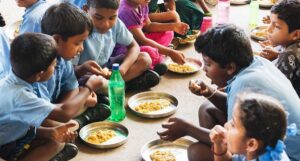
Children attended school even before the mid-day meal scheme existed. Poorly planned implementation has done more harm than good, even reducing attendance. If meals must be served, nutrition experts should be employed—creating jobs and ensuring quality. Teachers are being forced to become food supervisors, undermining their professional expertise.
6) Non-Academic Duties Imposed on Teachers
Beyond mid-day meals, teachers are burdened with countless non-academic responsibilities. Schools have effectively become extensions of block offices. Every government scheme appoints a nodal teacher, leaving classrooms unattended.
Election duties, voter list revisions, census work—all consume teachers’ time. These could be handled by trained personnel, generating employment. Instead, teachers run from office to office while education collapses.
7) Indifference Within the Teaching Community
Perhaps most tragic is the indifference of the teaching community itself. Instead of resisting, many teachers have become blind supporters of political parties. There is little effort to mobilize students and parents into collective resistance.
Many teachers live comfortably, immersed in consumerism, further alienating the public. Numerous government school teachers send their own children to private schools—forgetting that the collapse of public education will ultimately threaten their own livelihoods.
The recent loss of 26,000 teaching jobs in West Bengal failed to generate united resistance. Furthermore, the NCTE’s 2010 directive requires most government teachers to pass the TET exam, threatening mass job losses and widespread psychological distress.
8) Indifference of Political Leadership and Organizations
Despite rhetorical commitments to education, almost all political parties—across ruling and opposition—have overtly or covertly supported privatization through policy and legislation. Even non-parliamentary political forces have failed to mount effective resistance. The destruction of education appears to enjoy silent consensus.
9) Indifference of Civil Society
So-called progressive civil society and NGOs remain largely silent. Having enrolled their own children in elite private schools, they have withdrawn from social responsibility.
Education brings consciousness; consciousness brings revolution. To prevent youth from understanding the exploitative foundations of economic and social crises, reactionary forces promote cultural decay and distractions. Recent chaotic youth movements in Sri Lanka, Nepal, and Bangladesh serve as warnings of what an uneducated, directionless generation can become.

What Happens If Public Education Collapses?
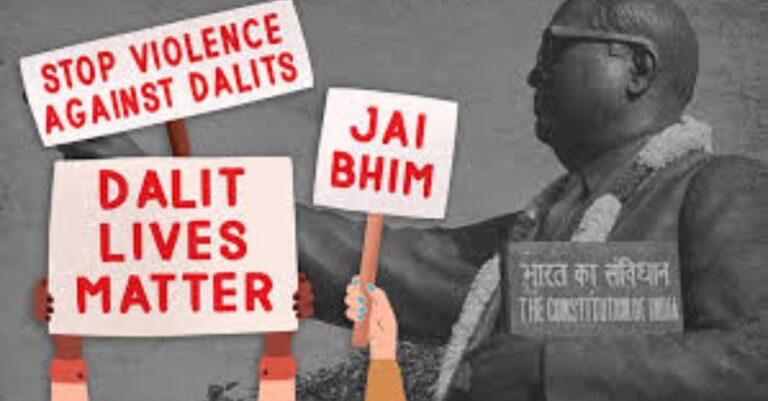
The privatization of education risks restoring caste-based servitude. Historically, caste domination thrived on denying education to the oppressed. Without universal education, we would never have had Ambedkar, Periyar, Jyotiba Phule, Savitribai Phule, Begum Rokeya, or Jaipal Singh Munda.
These leaders did not merely educate themselves—they fought to spread education among the oppressed. Without them, would we have leaders like Ram Nath Kovind or Droupadi Murmu?
Privatization will benefit the wealthy but devastate Dalits, minorities, and Adivasis who lack capital. Healthcare privatization has already shown us the outcome: treatment for the rich, death for the poor.
An uneducated society breeds crime and decay. Just as a forest fire spares no creature, the collapse of education will harm rich and poor alike.
Public anger against teachers must be redirected toward the real architects of destruction. The collapse of public education will have far-reaching consequences. Most parents cannot afford private schooling.
Therefore, students, teachers, and parents must close ranks and join hands together. We must choose: either silently watch public education collapse or unite to save it. Teachers, as the most advanced section within education, must lead this struggle—as they have done historically.
Is it wrong, even today, to expect them to show the way?
(The views and opinions expressed in this article are those of the author and do not necessarily reflect the official policy or position of Free Voice.)