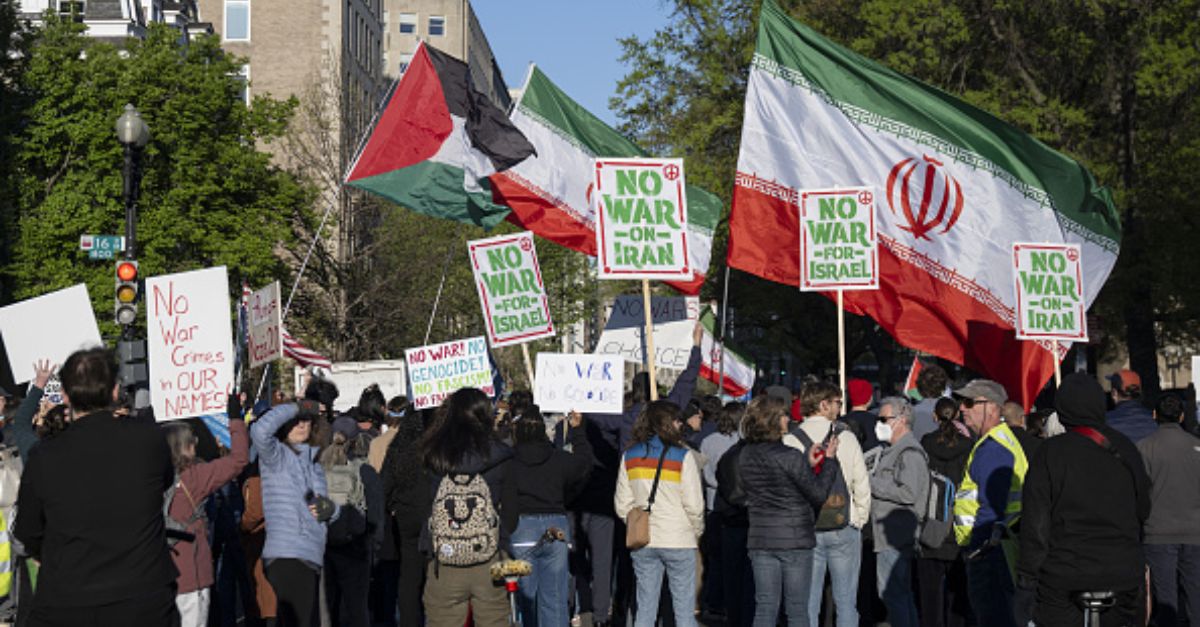

When the announcement of a two-week ceasefire between America and Iran was made, the world collectively exhaled in relief. For more than a month, the clouds of war had loomed over West Asia, casting a shadow of fear not only over the nations directly engaged in conflict, but over billions of ordinary people across the globe. The blockade of the Strait of Hormuz, devastating aerial strikes, and threats to erase entire civilisations had shaken the world to its core. Against that backdrop, this ceasefire is undeniably a relief. Yet the question of how long that relief will last remains unanswered.
To understand this war, one must first understand its background. Multiple rounds of negotiations were already underway between America and Iran. The prospects of a deal through Omani and British mediation were strong. But President Donald Trump, provoked and encouraged by Israeli Prime Minister Benjamin Netanyahu, ordered bombing strikes on Iran on 28 February. Iran’s Supreme Leader Ayatollah Ali Khamenei and several senior officials were killed in those strikes. Trump had expected Iran to buckle under the shock. The opposite happened. Iran launched fierce counter-strikes on American bases across the Gulf region, shut down the Strait of Hormuz, and dragged the global economy into the conflict. It is now abundantly clear that this war did not need to happen. Agreements that could have been reached peacefully were ultimately paid for with thousands of innocent lives.
At the very outset of the war, Trump had declared a set of ambitious objectives: destroying Iran’s missile capability, dismantling its navy, ending its nuclear programme, and engineering a regime change. After forty days of devastating warfare, not a single one of these objectives was achieved. While America and Israel inflicted significant damage on Iran, Iran did not collapse. On the contrary, the experience of war gave Iran a new kind of strategic strength. It demonstrated to the world its capacity to exert leverage over the Strait of Hormuz. Paradoxically but truthfully, this conflict, rather than weakening Iran, has made it strategically more powerful in a West Asia that is rapidly destabilising.
After the ceasefire, both nations claimed victory. Trump declared it proof of American military supremacy and a symbol of having curbed Iran’s nuclear ambitions. Iran, for its part, said it had stood alone against the world’s most powerful superpower and demonstrated its influence over the global oil supply. Behind these contradictory claims lies a bitter truth. The one who started the war failed to achieve its goals, and the one who endured it declared itself the victor despite losing so much. Seasoned diplomats observe that neither side’s statements carry the seeds of lasting peace they are signals of the next strategic manoeuvre.
The terms of the ceasefire itself are riddled with contradictions. Iran and Pakistan say the ceasefire applies to all fronts, including Lebanon. But Netanyahu, even while welcoming the ceasefire, made clear that Israeli strikes on Lebanon would continue. Within minutes of the ceasefire announcement, Israel launched a hundred strikes on Lebanon in the space of ten minutes. Civilians were wounded. The campaign of targeting Hezbollah continued unabated. Against this backdrop, Iran warned that if attacks on it persisted, it would extend the conflict beyond borders. This is not merely a diplomatic warning — it is testimony to how fragile this ceasefire truly is. If there is no consensus even on the definition of the agreement, the question of how long it can hold becomes unavoidable.
Disagreements between the two sides are equally sharp on the question of the Strait of Hormuz. Trump says the strait will remain open. Iran says vessels will only be permitted passage with authorisation and upon payment of fees. Following intense Israeli strikes, Iranian state media announced that the strait was closed. How swiftly reality can shift in a single day this incident serves as a stark illustration. Trump claimed that a regime change had taken place in Iran. In reality, the new leadership that has come to power is less experienced, more unpredictable, and more hardline in its positions. Future negotiations will therefore be harder, not easier.
The price this war has exacted from the world is immense. Oil, gas, and food prices soared. Global markets were thrown into turmoil. Humanitarian relief operations were disrupted. The heaviest burden of all this fell upon the world’s poorest and most vulnerable populations. Countries with no direct role in the conflict also suffered the consequences of this instability. After so much destruction, with not a single war objective achieved, the world is asking: what was the justification for this war? Thousands of innocent lives were lost, including those of children. Millions were left traumatised frightened, exhausted, and psychologically shattered. The parties to the conflict openly expressed their intent to commit war crimes. The moral cost of all this is beyond calculation.
America spent billions of dollars in this war, depleted its defence systems on a massive scale, and damaged relations with its allies. Trump defined victory as the reopening of a waterway that had been open before the conflict began. Many American citizens are now asking what kind of victory this truly is. Even among his own supporters, divisions have emerged. Domestic prices have risen and economic discontent is growing. Israel too has strained its ties with Gulf nations and pushed global public opinion — already alienated by the Gaza war — further into opposition. Netanyahu had promised Trump that the war would be short and easy. Yet Trump was soon left searching for a way out. Israel failed to achieve its intended goals and is now left facing an adversary that, while weakened, is more unpredictable and more bitter than before.
The Gulf states are deeply angered by the entire sequence of events. They never wanted this war. America is now withdrawing, leaving behind a more enraged and more dangerous Iran. Their image as a safe destination for tourism and investment has been tarnished by the war. Their vital maritime trade routes remain entangled in disruption. For Iran, perhaps mere survival may have to count as success. But senior leaders are dead, an already fragile economy has been further battered, essential infrastructure has been destroyed, and citizens may face even harsher repression. The concern that this war has given Iran an even stronger justification to pursue nuclear weapons as essential for its future security is not without foundation.
And who are the real victors in all of this? The arms manufacturers, whose products were consumed by this war. Russia, which has benefited from elevated oil revenues. And perhaps China, which emerges from this chaos appearing to be the more stable, more reliable power. The perception that America is turning away from the Pacific is taking hold, and China stands to gain from it. For America, this is not merely a temporary diplomatic setback — it is a long-term strategic blunder.
This war has weakened the very idea of a rules-based international order. Discussion of war crimes is becoming normalised. Trump threatened that “tonight, an entire civilisation will be destroyed,” and the very next day was speaking of a peace deal. The gulf between those two statements is not merely political it is moral. When the person occupying the most powerful office in the world speaks in such a manner, it strikes a blow not only to the dignity of that office, but to the entire framework of international diplomacy.
Pakistan’s role as mediator holds particular significance in this context. Its constructive diplomatic efforts in bringing the two sides to the table have been meaningful. The talks scheduled to take place in Islamabad on Friday will be critical in shaping the long-term direction of this conflict. But a wide gap remains between America’s 15-point proposal and Iran’s 10-point formula. On every issue uranium enrichment, control of the Strait of Hormuz, missile capability, and sanctions relief the differences run deep. If these negotiations fail, it will not take long for the clouds of war to gather once again.
It is clear that the current ceasefire represents a limited window of opportunity. For this opportunity not to be wasted, both sides will have to reconsider their positions. If genuine peace and stability are to be established in the region, Israel’s aggressive militarism must be reined in. Stopping the strikes on Lebanon would be the first step. A clear, shared understanding of the ceasefire’s terms is essential. Without agreement on sensitive issues such as uranium enrichment and control of the Strait of Hormuz, this ceasefire will not hold.
The agreements that were possible before this war began are now harder to reach. A greater price in lives has been paid. And yet, the answer that must ultimately be found is the same one that was always available: dialogue, diplomacy, and mutual respect. Trump must understand that inflammatory rhetoric, crude language, and threats to destroy civilisations are not instruments of diplomatic success. If he wishes to find his way out of the entanglement he has created for himself, he must watch his words and focus on building a lasting peace.
Ultimately, this ceasefire is not merely a test of the intentions of the parties to the conflict it is a test of the collective conscience of the international community. That war does not resolve questions but only makes them more complex, this conflict has proven once again. The window of peace that is now available must not be used merely to draw breath before the next war, but to begin a genuine march towards enduring peace. Otherwise, this pause will prove fleeting and the next conflict will be far more devastating.