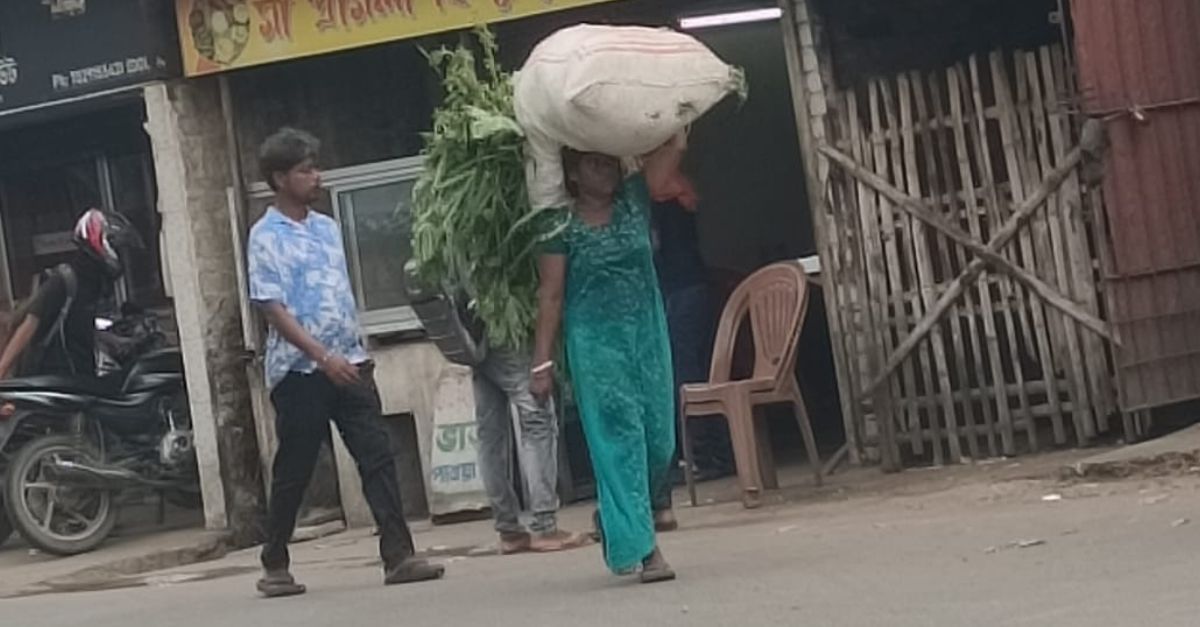

An invisible enemy has now made its home on farmlands across the world and that enemy is the raging fury of rising temperatures. The picture painted by the jointly published report “Extreme Heat and Agriculture” by the United Nations Food and Agriculture Organization (FAO) and the World Meteorological Organization (WMO) is not merely alarming it is directly linked to human existence itself. The livelihoods, health, and labour of more than one billion people are becoming entangled in the grip of this devastating heat. Over the past fifty years, the frequency, intensity, and duration of extreme heat events have all increased rapidly, and there is every indication that this crisis will deepen further in the times ahead.
FAO Director-General Qu Dongyu, while describing this situation, used the term “risk multiplier” meaning a condition that does not wound just one sector alone, but simultaneously injures agriculture, animal husbandry, fisheries, forest resources, and the social systems dependent upon them, all at once. The Secretary-General of WMO also stated clearly that it is now heat itself that is deciding how farming will happen, where it will happen, and how much will happen. This is a crisis that pushes already vulnerable communities even deeper into the pit.
The impact on agriculture is not merely temporary. Once temperatures cross thirty degrees Celsius, the productivity of most major crops begins to fall. For some crops like potato, the adverse effects begin at even lower temperatures. Speaking of livestock, once temperatures rise above twenty-five degrees, most animals begin experiencing “heat stress,” which reduces milk production and has long-term consequences on their overall health. For poultry and pigs, this threshold is even lower. The situation for fish in the oceans is no different in warmer water, oxygen levels drop and their survival becomes difficult. In 2025, marine heat waves were recorded across more than ninety percent of the world’s oceans this single figure is enough to convey the scale of this crisis.
The impact on agricultural labourers is direct. In South Asia and many other regions, there may be nearly two hundred and fifty days in a year when working under the open sun could be life-threatening. Moreover, heat is not the only crisis it also accelerates water scarcity, sudden droughts, forest fires, and the spread of pests and diseases. A global study conducted by scientists affiliated with the University of British Columbia has laid out this crisis even more clearly. They closely studied the year-on-year changes in the production of three important crops maize, soybean, and sorghum. The findings are startling for every one degree Celsius rise in global temperature, volatility in maize production increases by seven percent, in soybean by nineteen percent, and in sorghum by ten percent. These are not mere numbers for a farmer, one bad season means the difference between family prosperity and poverty. Dr. Jonathan Proctor put it precisely: a farmer does not live on average output but on the actual harvest of each year. One bad season is enough to push him into financial ruin.
The relationship between the intensity of temperature rise and its consequences is not linear it is geometric. If temperatures rise by just two degrees Celsius, then soybean crops that were destroyed once in a hundred years will now be destroyed once in twenty-five years. Maize crops could face crisis once in forty-nine years and sorghum once in fifty-four years. If atmospheric emissions are not controlled, by the end of the century soybean crops could be devastated once every eight years a picture that is terrifying from the perspective of food security. It must be understood that agriculture is not merely a farmer’s issue. As Dr. Proctor says not everyone farms, but everyone needs to eat. When production becomes volatile, its ripple spreads across global markets, prices rise, and the common person’s plate begins to go empty. An example of this is the 2012 drought in the American Midwest maize and soybean production fell by twenty percent, the American economy suffered a blow of billions of dollars, and food prices in global markets rose by ten percent.
The epicentre of this crisis, however, lies in the most deprived continent. Countries in sub-Saharan Africa, Central America, and South Asia are at the greatest risk because here farming is rain-dependent, irrigation facilities are absent, and the economic safety net is frayed. Where irrigation is available, volatility reduces to some extent, but it is in the most dangerous regions that water scarcity is the greatest this is a vicious cycle from which escape is not as easy as it appears.
Speaking of India specifically, the reality presented by the “Weathering the Storm” report by IPE Global and ESRI India is deeply troubling. By 2030, extreme rainfall events in the country could increase by forty-three percent and heat wave days could become two and a half times more frequent. It has been projected that in major cities like Mumbai, Delhi, Chennai, Hyderabad, and Patna, heat wave days will double. Between 1993 and 2024, the number of extremely hot days during summer (March to September) in India has increased fifteen-fold and in just the last ten years, this figure has reached nineteen-fold. Serious threats loom over agricultural production in many districts such as Darjeeling, Salem, Hassan, and Chikmagalur. In states like Gujarat, Rajasthan, Maharashtra, Uttar Pradesh, Odisha, and Uttarakhand, both heat waves and extreme rainfall are projected to converge simultaneously, and it is estimated that by 2030, more than eighty percent of the districts in these states will be affected.
There is a separate dimension to this situation that is often overlooked and that is the interrelationship between heat and extreme rainfall. Where heat waves are more intense, irregular and sudden heavy rainfall has also been found to be greater. Prolonged heat disrupts weather cycles, and from this, torrential and uncontrolled rain is born. In addition to this, changes in land use, deforestation, and encroachment upon mangroves these factors affecting local climates create further complications.
As solutions to all of this, experts suggest several measures selection of heat-tolerant crops, changes in sowing schedules, improved agricultural management, early warning systems, and financial protection measures such as crop insurance. For India specifically, the recommendation has been made to establish systems like a “Climate Risk Observatory” that will monitor climate hazards in real time. There is also a suggestion to appoint “Heat Champions” at the district level to deal with heat waves.
But beyond all these measures, there is one solution that is fundamental and unavoidable halting global warming, which means imposing strict cuts on emissions. Local measures, however important, prove insufficient as long as radical changes are not made at the global level in emission policies. Showing the courage to move away from high-emission models of development, increasing international cooperation, and working on risk-sharing policies only when all of these come together will it be possible to overcome this crisis.
The future of food does not belong only to farmers it belongs to all of us. When standing crops in the fields are scorched by the sun, the impact begins from the farmer’s home and reaches all the way to global markets. In this interconnected world, ignoring the shadow of heat is like striking a blow at one’s own plate. There is still time but it is passing swiftly, and it is essential that this be understood.