
By Vikas Parasram Meshram
Although India is counted among the world’s fastest-growing economies today, when viewed from the lens of equality, a vast chasm is clearly visible in society. According to the ‘World Inequality Report, 2026’, approximately 65 percent (nearly two-thirds) of India’s total wealth is concentrated in the hands of just the top 10 percent of the wealthy, while the bottom 50 percent possess only 6.4 percent of wealth. Female labor force participation rate is merely 15.7 percent.
The top 1 percent of the country holds more than 40 percent of wealth, considered the highest level since 1961. Where the top 10 percent earn 58 percent of national income, the bottom 50 percent receive only 15 percent. Between 2014 and 2024, the income gap between the top 10 percent and bottom 50 percent has slightly increased from 38 percent to 38.2 percent.
According to statistics, India’s average annual per capita income is approximately 6,200 euros and average wealth is about 28,000 euros. This report considers India one of the most unequal countries in the world. Inequality has expanded rapidly after economic liberalization. According to Indian government data, even today 41.32 percent of people lack adequate housing, while 31.52 percent of the population is deprived of balanced nutrition. Despite this, the same report claims that 248.2 million people have risen above the poverty line. Looking at consumer market flows, while demand for premium goods increases, the affordable housing sector shows decline this too is indicative of inequality. Due to massive concentration of income and wealth, the majority of people remain deprived of basic facilities. Disadvantaged sections of society still cannot achieve expected access to education, healthcare, employment, etc.
The development disparity between developed and backward states also increases inequality. Due to displacement, many lose their livelihoods and basic rights. Inequality in land ownership and agricultural inefficiency adversely affect rural incomes. Lack of quality education in backward areas limits the earning capacity of local residents. A large section of the country works in the unorganized sector with low wages and unstable employment. The wage gap between skilled and unskilled workers is substantially visible. Many people work at jobs below their qualifications, negatively affecting both productivity and income.
Globalization has also directly and indirectly fueled inequality. Because barriers in the manufacturing sector and benefits in the service sector remain limited to a few privileged classes, millions of people don’t get employment opportunities. Greater reliance on indirect taxes places additional financial burden on the poor and also harms the unorganized sector. Particularly the rising prices of essential commodities make life even harder for low-income groups.
The main causes of income inequality in India are unequal access to education and health facilities, disparities in employment opportunities, gaps in skills and wages, regional imbalances, caste and gender-based discrimination, and wealth concentration. This chasm is deepening further due to inflation, ineffective government policies, failure to implement principles of social justice, and unequal distribution of resources and economic opportunities.
Inequality in India has become a complex and widespread problem. According to experts, this imbalance can have long-term and serious effects on the economic and social structure. The widening gap between rich and poor not only harms the country’s socio-economic structure but also undermines peace, harmony and unity in society; consequently fueling discontent, hatred and conflict. The facts in the report contradict the claims of economic and social equality presented by politicians, based on which they are seen playing vote-bank politics during elections.
In fact, the concept of comprehensive national development is based on the creation of an ‘egalitarian society’. The main objective of an egalitarian society is to provide equal rights, opportunities and resources to every section of society without any discrimination. Experts recommend measures like comprehensive wealth tax and super tax for wealth redistribution in India, for tax justice. Through proper planning and concrete policies, this deep chasm in society can certainly be reduced.
The World Inequality Report 2026 reveals extremely shocking realities about the distribution of wealth and income in the country. According to this report, the top 10 percent of people in India have concentrated a whopping 65 percent of the country’s total wealth. This means approximately 140 million people control two-thirds of the country’s wealth, while the remaining approximately 1.36 billion people are left with only 35 percent of wealth. If we consider today’s population at approximately 1.4 billion, this inequality figure becomes even more stark. Against this backdrop, a fundamental question arises from which social and class groups do these 140 million extremely wealthy people come?
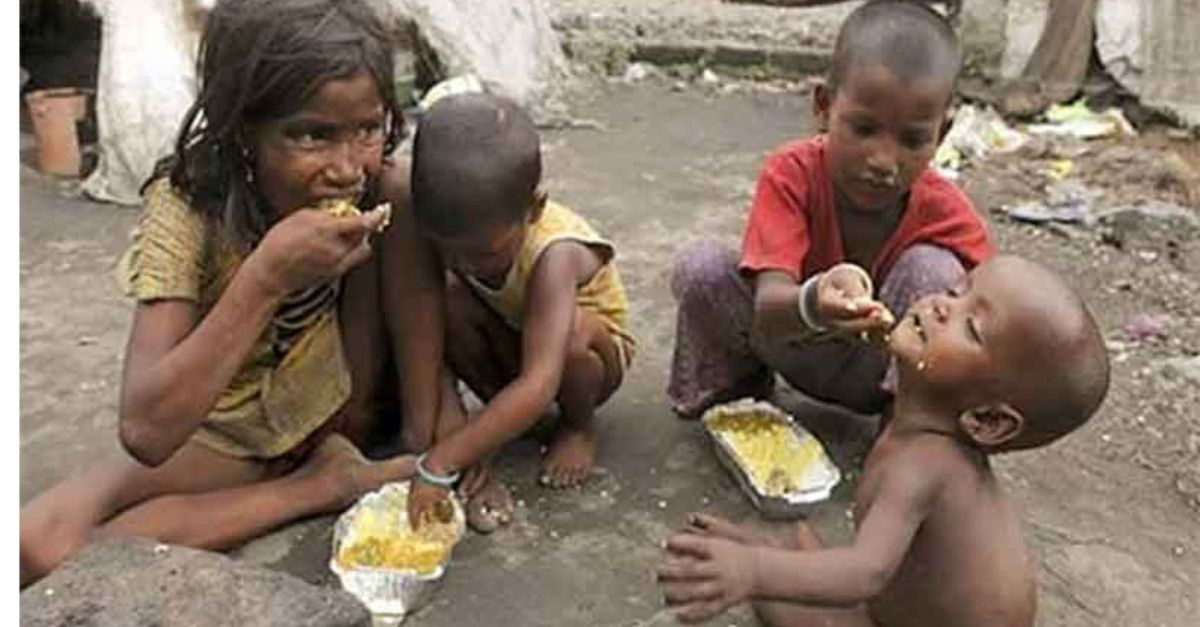
In a country with a $3.5 trillion economy, what could be more ironic than millions of children still battling malnutrition? This means that even after 75 years of independence, we have failed to provide adequate nutrition to our children.
A new report released by the United Nations on the global malnutrition situation reveals that in India, 21.9 million children under five years are still underweight for their height. This means 18.7 percent of the country’s children suffer from wasting.
According to the World Health Organization (WHO), wasting is a malnutrition-related problem where children’s weight is lower than their height. For your information, this condition causes children to become significantly thinner than their height.
After South Sudan, India’s situation is worst in this regard. It’s noteworthy that in South Sudan, approximately 22.7 percent of children under five suffer from this problem. In Yemen 16.4 percent, in Sudan 16.3 percent, and in Sri Lanka 15.1 percent of children suffer from this problem.
This information was revealed in the United Nations report “Child Malnutrition Levels and Trends 2023” jointly released by the United Nations Children’s Fund (UNICEF), World Health Organization (WHO), and World Bank.
According to the nutrition targets set for 2030, the global malnutrition rate among children under five should be reduced to below 3 percent. Whether India can achieve this target by 2030 is itself a major question. However, statistics show India is far behind this target and achieving it, if not impossible, is certainly difficult.
Globally, approximately 45 million children under five are wasted. This means 6.8 percent of the world’s children suffer from this malnutrition problem. According to statistics, the proportion is highest in South Asia, with India being the worst.
Malnutrition in children primarily occurs due to nutritional deficiencies in their diet or frequent illnesses. This condition can also endanger children’s lives. Moreover, malnourished children have significantly weakened immunity, which can affect their physical and mental development in the long term.
According to statistics, 13.6 million children worldwide suffer from severe malnutrition. According to the report, approximately three-fourths of the world’s children suffering from severe malnutrition live in Asia, while the remaining 22 percent are in Africa.
India is not only affected by wasting. Looking at child malnutrition, the problem of stunting is also serious in the country. According to statistics declared in the report, approximately 31.7 percent of children in India are stunted compared to their age. Globally, the country ranks first in this area, with such a large number of stunted children.
The report estimates that looking at the improvements in the stunting situation, it seems unlikely that nearly half the world’s countries will achieve the targets set for this purpose. Therefore, if we want to achieve these targets, efforts need to be significantly accelerated.
In reality, malnutrition is not a disease that cannot be cured. We just need to pay attention to it. This problem is not limited only to the policy level but can also be significantly curtailed by considering the diet given to children in families keeping their health in mind.
However much the world may boast about development or technological progress, living on an empty stomach is a harsh reality that cannot be denied. A new report from the Food and Agriculture Organization has confirmed this.
295 million people worldwide still live in circumstances where affording even one meal a day is difficult. This was revealed in the “Global Food Crisis Report 2025” released today. According to the report, the world’s most vulnerable people remain trapped in the vicious cycle of conflict, inflation, climate crisis and forced displacement. All these have further worsened an already fragile situation.
For millions living in the world’s most vulnerable and crisis-affected regions, 2024 was no less than a nightmare. The report shows that 2024 was the sixth consecutive year of severe food crisis and child malnutrition. This has brought millions to the brink of starvation in many vulnerable regions worldwide.
Data shared in the report shows that in 2024, 295 million people in 53 countries or regions faced acute food shortage. This figure is 137 million more than 2023. This means the situation has worsened rather than improved.
In 2023, more than 280 million people in 59 countries faced acute starvation: Report
The world’s most vulnerable people remain trapped in the vicious cycle of conflict, inflation, climate crisis and forced displacement.
The report also highlights that approximately 22.6 percent of the estimated population faced acute food shortage. Worryingly, this figure has remained above 20 percent for the fifth consecutive year.
1.9 million people’s situation is so dire that they are on the brink of starvation. You’ll be surprised to know this is the highest record ever since data collection began in 2016.
Nearly 38 million children under five in 26 crisis-affected regions worldwide have been found to be acutely malnourished. The situation is most alarming in areas like Gaza, Mali, Sudan and Yemen. Famine has been confirmed in Sudan, the first time famine has been declared globally since 2020.
The report also states that forced displacement is increasing the starvation crisis. Of 128 million displaced persons, 95 million live in countries facing food crisis, including the Democratic Republic of Congo, Colombia, Sudan and Syria.
UN Secretary-General António Guterres described this report as “a mirror of the world’s inaction.” He said, “This is not just a systemic failure but a failure of humanity. Hunger in the 21st century is unacceptable. We cannot respond to empty stomachs with empty hands and turned backs.”
The report shows that war and violence have left approximately 140 million people in 20 countries suffering from starvation. Famine has been confirmed in Sudan. The situation is extremely alarming in Gaza, Haiti, Mali and South Sudan too. Economic crisis is making the situation even worse.
Economic shocks like inflation and currency devaluation have made 59.4 million people in 15 countries vulnerable. Surprisingly, this number is still double the pre-COVID level.
Climate impacts are also affecting people. Droughts and floods caused by El Niño have plunged 96 million people in 18 countries into food crisis. The situation is particularly dire in Southern Africa, South Asia and the Horn of Africa.
The report also predicts that there will be no significant improvement in the situation in 2025. International funding for food and nutrition aid is experiencing the biggest decline ever.
While severe food crises and malnutrition have reached record levels, global aid and political will are declining. Consequently, the report emphasizes going beyond emergency aid to invest in local food systems and nutrition services in crisis-affected areas. These changes are particularly important in areas where 70% of the rural population depends on agriculture. To prevent the growing crisis of hunger and malnutrition, a new approach is needed by taking concrete steps. One that is effective and evidence-based.
Considering tribal society, according to the 2011 census there were approximately 105 million Scheduled Tribes in the country, which has reached at least 120 million today. However, the inclusion of tribals in the top 10 percent who control 65 percent of the country’s wealth is almost negligible. This reality is not merely one of neglect but bears witness to structural deprivation.
The picture is not very different for Dalit society. In 2011, the Scheduled Caste population was 16.6 percent of the country’s total population, approximately 200 million. Today it’s around 240 million. However, among the country’s wealthiest 140 million people, Dalit individuals would be countable on fingers, or perhaps not even one—this is the situation.
Considering the extremely backward classes, this community comprises approximately 30 to 35 percent of the country’s population, meaning more than 400 million people. Yet finding extremely backward individuals among these 140 million people who own 65 percent of the country’s wealth is almost impossible. The same reality exists for Other Backward Classes. More than half the country’s population, approximately 700 million people, fall into this category, but their participation in the highest wealth-holding group is very small—perhaps limited to one or two percent.
From all this analysis, one thing becomes clear: this class that dominates the country’s wealth primarily belongs to Dwija-Savarna caste groups or certain dominant caste groups that have historically remained on top. Even among these castes, not all people are wealthy, but wealth concentration is clearly visible mainly in these social components.
Considering laborers, the possibility of even one laborer being among the owners of 65 percent of the country’s wealth is almost zero. According to the Government of India’s 2023-24 data, there are approximately 643.3 million working people in the country. Of these, 312 million work in the unorganized sector. It would have to be said that it’s impossible for even one person from this class to be included in the top 140 million wealth holders. The same truth applies to the 159 million people working in agriculture.
The situation of families dependent on agriculture is equally dire. According to a report by the Research Institute PRICE, approximately 68.4 million families are completely dependent on agriculture. Assuming an average family size of 4.9, the population in this class is approximately 335 million. None of these millions of people are likely to be among those 140 million who claim 65 percent of the country’s wealth.
The World Inequality Report 2026 presents another shocking fact: 40 percent of total wealth is concentrated in the hands of the top 1 percent. This means just 14 million people have become owners of nearly half the country’s wealth. The possibility of tribals, Dalits, extremely backward or majority Other Backward Classes being in this class is almost nil. Individuals from some historically ruling dominant caste groups may be found here as exceptions, but it’s impossible for hardworking farmers or laborers to be here.
This inequality is not limited to wealth alone. Nearly the same picture exists regarding income. The top 10 percent of the country receives 58 percent of total income, while the bottom 50 percent gets only 15 percent. This gap is widening year by year. Just three years ago, the top 10 percent held 58 percent of the country’s wealth, which has now reached 65 percent. This means newly created wealth is primarily going to the rich, and there’s also a transfer of the limited wealth of the poor to the upper classes.
This situation is not merely a question of the difference between poverty and wealth. When a large share of the country’s wealth and income becomes concentrated in the hands of a few, these people exert decisive influence on the country’s economic policies, priorities and future plans. They provide financial support to political parties according to their interests, control the media, decide which issues to bring forward and which to suppress. Their influence on social media is also increasing.
This is clearly evident from donations received by political parties. In 2023-24, the Bharatiya Janata Party received donations of Rs 2,243 crore, showing a 211 percent increase compared to the previous year’s Rs 719 crore. That year, of the total donations received by all parties in the country, 88 percent went to BJP alone, while Congress received only Rs 281 crore in donations.
The relationship between the growing wealth of the country’s few rich and BJP’s increasing donations was not created by coincidence. Dr. Babasaheb Ambedkar warned in the Constituent Assembly itself that if social and economic inequality is not eliminated, it will swallow political democracy. Today economic inequality has reached such extremes that it poses a serious threat to the country, society and democracy.
(First published in Countercurrents)