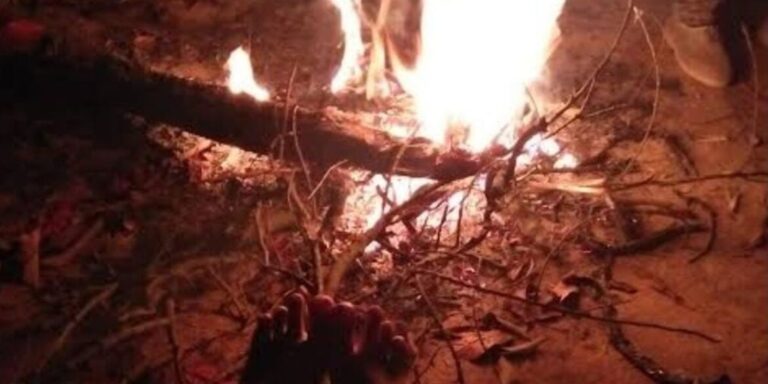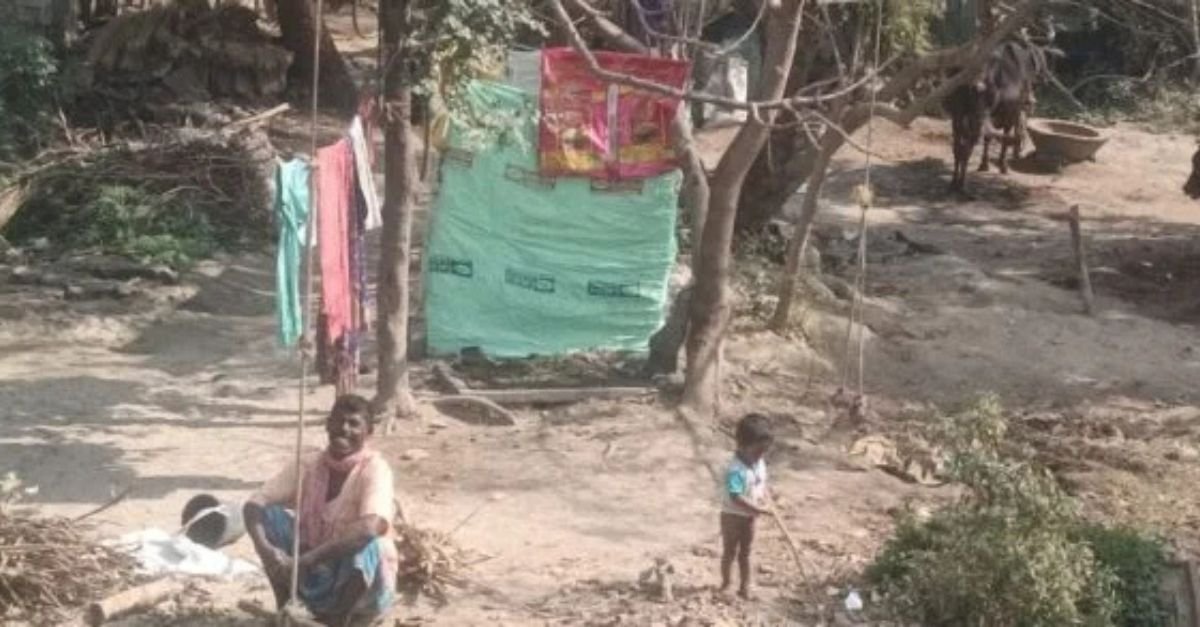

Afiya was lifting the rice pot off the mud-oven when the hot steam of rice struck her face. Her eyes fell to the door. Samim was standing there. How long he had been standing, she could not say. In his hand, a paper — pale yellow, folded down the middle. Afiya set the pot down. The steam rose again into her face. She did not notice.
Samim came inside. His footsteps made no sound. He placed the paper on the table as though it were made of glass, as though it might shatter. With one finger he pushed it toward her.
“The Tribunal notice has come. They’ve fixed a date for the hearing.”
Afiya’s hand froze. She had heard the word tribunal before. About a year ago, a notice had come for a man in the next village. After that, no one saw him again. People said he’d been sent to a camp. What kind of camp, where — no one could say. Now that same word had entered her house. It pressed itself against the four walls of her room.
Samim said, “There’s some trouble with the spelling of my Father’s name.”
His voice was dry, as if he hadn’t drunk water for a long while.
Afiya said nothing. She stared at the rice pot.
That night Afiya lay awake whole night. She heard Samim turning, restless, the bed quaking beneath him. After a while he rose. He was doing something at the table. Afiya opened her eyes and saw him bent over a notebook, scribbling, crossing out. He pressed the pen so hard the paper tore through. Afiya got up and went to look — Samim had written his own name, his father’s name, and then struck through the whole thing. Again he wrote, again he struck it through.
“What are you doing?” Afiya asked.
Samim flinched the piece of paper. He turned to her. Afiya saw that his eyes were swollen, red. “Fixing the spelling,” he said.
“The spelling is fine.”
Samim said nothing more. He ran his finger over the crossed-out lines, again and again.
Days passed. One day Afiya opened the almirah and found a heap of papers — school certificates, voter lists, land deeds. On every paper the name was spelled differently. In one place, Samim Alam. In another, Samim Ali. In another, Shamim. Samim was upset, “I don’t know which one is real.”
Afiya looked vacant, sat holding the papers. She unfolded all the documents one by one, and carefully folded them again. The names blurred before her eyes.
The next afternoon Afiya was hanging washing in the yard. Their child was playing football. Suddenly she heard running footsteps. She looked up. Samim. Gasping for breath, his shirt soaked with sweat, his eyes were red and swollen. He ran straight into the yard and through the door entered the house, and forcibly shut it behind him.
Afiya flew the clothes down and ran after him. She pushed the door open. Inside, darkness. Samim was sitting on the floor by the window, knees drawn to his thumping chest, shaking.
“What happened?” Afiya looked ashen, and sat beside him.
Samim did not answer. His lips quivered. His fingers scratched at the floor. Afiya saw mud on his shoes — he hadn’t come by the road, then, but running through the fields. She gently placed a hand on his shoulder. Samim startled, as if burned.
“Army trucks. Following me.”
“Why? You haven’t done anything.”
Samim did not reply. Afiya held his hand and sat with him. Outside, their son had stopped playing and stood staring at the door. The ball rolled from his hand across the yard and now it came to rest in a corner.
After that the days were not the same.
Samim now stayed home all day. He used to drive for Arman Chowdhury; now, hearing the news, Chowdhury had let him go. No more wages. Afiya struggled to keep the household running, but she said nothing — she knew there was no use in saying anything. Samim used to buy fresh notebooks from the market. Now he wrote on the backs of old papers.
One day their son came and asked, “Baba, what are you writing?” Samim looked at him. He tried to speak and could not. His own name would not come to his tongue. His lips trembled. The boy asked again, “Baba, what’s your name?” Samim lowered his eyes. Afiya pulled the boy away. Samim was still staring at the ground.
The day of the hearing came, and passed. Samim did not go. Afiya said nothing.
One morning there came a sudden heavy knock at the door. Loud. Thud, thud, thud. Afiya opened it. Two policemen. One tall, moustached. The other lean, a notebook in hand. The moustached one, without looking at Afiya, said, “Samim Alam?”
Afiya looked back. Samim was sitting on the chair. Not shaking. His eyes fixed, staring at the wall. The police men came in. The thin one opened his notebook. “The Tribunal’s judgment has come. Your name isn’t on the list. You’ll have to go to the station.”
Afiya said fearing the worst, “Now? This morning?”
The thin one looked at her. “Yes.”
Afiya said, “But the papers are in perfect order. The spelling of his father’s name—”
The thin one shook his head. “That’s not my issue. Whatever the judgment says, that’s what must be followed.”
The moustached one looked at Samim. “Come along. Come quick.”
Samim stood. The chair scraped back, a dry creak against the wooden floor. He looked once at Afiya. She could read nothing in his eyes — pale, empty. He began to walk. The police men followed him.
Afiya stood in the doorway and watched her husband go. Their son had stopped playing and stood staring at the receding figure. The ball lay still at his feet.
That night, Afiya did not know when Samim returned. She thought she might have heard a car, but sleep had blurred it. She woke to find him sitting facing the door, as though still waiting for someone. Around his neck, Arman Chowdhury’s muffler. He had not eaten. He had not spoken. Afiya sat beside him a long while. She thought — tomorrow morning, she would do something. But the night had to pass first.
Now everyone was asleep. Afiya held Samim’s hand and sat with him. Meanwhile she fell asleep. At dawn she woke but Samim was nowhere.
In the morning air, the red petals of the krishnachura tree swayed. Afiya opened the door and went outside. She walked behind the cowshed. She stepped to the krishnachura tree. After a few steps she halted. She soon sank to her knees. She reached out her hand. Samim’s hand was cold. His fingers stiff, curled — as though the last letter had been left unwritten. Afiya took Samim’s hand into her lap. She said nothing. She only sat there.
Their child woke and came to stand in the doorway. He looked at his mother. Then he came down into the yard. He picked up the ball. He said nothing. He only stood there, holding it to his chest.
After a long while, Afiya rose. She wiped her eyes. She looked at her son. The boy stood with the ball in his hands, his eyes grown wide.
Afiya went to him. She held him close. She whispered, “I will save you.”
Afiya went back inside and drew the door shut. Outside, the krishnachura was still red