
In the history of the world, such a grotesque and contradictory picture of wealth has perhaps never been witnessed as starkly as it is today. On one side, a handful of individuals accumulate in a single year more wealth than the annual income of entire nations. On the other, every fourth person in the world goes to bed half hungry.
Oxfam International, in its 2025 report titled “Resisting the Rule of the Rich: Protecting Freedom from Billionaire Power”, released during the World Economic Forum at Davos, has presented a deeply disturbing picture of global inequality.
The statistics in the report are staggering. In 2025, the total wealth of the world’s billionaires reached an unprecedented $18.3 trillion, marking an increase of over 16 percent compared to the previous year. In just one year, this ultra-wealthy class added approximately $2.5 trillion to its fortune an amount greater than the combined wealth of the poorest 3.83 billion people on the planet. For the first time in history, the number of billionaires has crossed 3,000, and their combined wealth stands at an all-time high. Since 2020, their wealth has increased by 81 percent, while the economic condition of nearly half of the world’s population has either stagnated or deteriorated.
To grasp the magnitude of this disparity, one comparison is sufficient: the wealth added in a single year is enough to eradicate extreme global poverty 26 times over. If used appropriately, this wealth could have eliminated severe poverty across the globe not once, but twenty-six times. Yet such a transformation appears unlikely, as the number of billionaires and their fortunes continue to rise while the pace of poverty eradication moves in the opposite direction.
At the apex of this enormous pyramid of wealth stands Elon Musk, whose net worth has crossed half a trillion dollars approximately $502 billion making him the first individual in history to reach such a figure. These numbers may appear abstract, but their real-world implications are staggering. The combined Gross Domestic Product (GDP) of 117 countries is lower than the personal wealth of Musk alone.
After Donald Trump assumed office again in November 2024, billionaire wealth reportedly grew three times faster than in the previous five years. Policies favoring tax cuts for the ultra-rich, weakening of international corporate tax frameworks, dilution of anti-monopoly laws, and strong incentives for artificial intelligence investments significantly accelerated wealth concentration. The impact was not limited to the United States; billionaire wealth outside America also surged at double-digit rates.
However, economic inequality is only one dimension of this crisis. The deeper threat lies in the growing political influence of billionaires. According to Oxfam’s findings, billionaires are 4,000 times more likely to attain political office than ordinary citizens. This figure directly challenges the foundational principle of democracy that every citizen’s voice carries equal weight. In practice, wealth increasingly amplifies political power.
A survey conducted across 66 countries under the World Values Survey revealed that nearly half of respondents believe wealthy individuals buy elections in their countries. Through campaign financing, control over media, and influence on policymaking, billionaires are hollowing out democracy from within. As the saying goes: economic poverty breeds hunger, and political poverty breeds anger. That anger is now erupting worldwide in the form of anti-government protests.
For the nineteenth consecutive year in 2024, global civic freedoms declined. One-quarter of countries imposed restrictions on freedom of expression. In 68 countries, over 142 major anti-government protests were recorded, many of which were suppressed violently. Research shows that countries with high inequality are seven times more likely to experience democratic erosion. Inequality is not merely an economic issue; it is a threat to democracy itself.
In the information age, those who control the media shape perceived truth. Today, more than half of the world’s major media corporations are owned or controlled by billionaires. Jeff Bezos owns The Washington Post. Elon Musk acquired Twitter (now X). Patrick Soon-Shiong purchased the Los Angeles Times. A group of billionaires holds significant stakes in The Economist. In France, Vincent Bolloré transformed CNews into what critics call “France’s Fox News.”
A study from the University of California found that after Musk’s acquisition of Twitter/X, hate speech on the platform increased by nearly 50 percent. What was once considered an open forum for dialogue is now widely criticized as a tool reflecting the ideology of its owner. In Kenya, officials reportedly used X to monitor and suppress critics, according to Oxfam’s report.
Closely linked to inequality is another silent crisis: land degradation. The Food and Agriculture Organization in its report “The State of Food and Agriculture 2025” states that approximately 1.7 billion people live in areas where human-induced land degradation is reducing crop productivity. Globally, average crop yields have declined by about 10 percent, and 47 million children under five suffer from stunted growth due to malnutrition. Restoring just 10 percent of degraded agricultural land could provide food for an additional 154 million people annually.
Hunger and climate change form a dangerous alliance. In 2025, over 295 million people worldwide faced acute hunger and famine-like conditions. According to research published in Scientific Reports, if greenhouse gas emissions continue unchecked, by 2100 around 1.16 billion people may experience at least one severe food crisis, including over 600 million children. However, sustainable development and timely emission reductions could save approximately 780 million people from such crises.
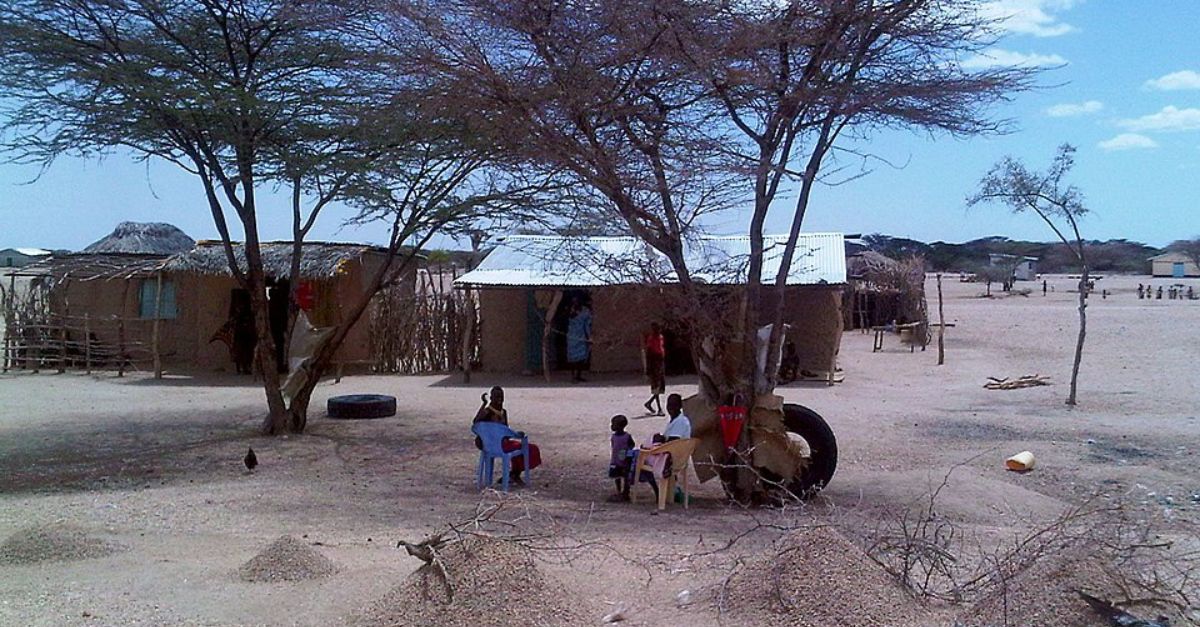
In Africa, extreme poverty is resurging. Budget cuts in global aid threaten health, education, and nutrition programs, potentially leading to 14 million additional deaths by 2030. These deaths are preventable but only if political will exists.
Food security is not merely about producing more grain. The world already produces enough food; the problem lies in distribution, affordability, storage, and governance. Strong local agricultural systems, water conservation, crop diversification, and community participation are the four pillars of genuine food security.
In India, farmer suicides, low crop prices, water scarcity, and erratic rainfall linked to climate change reflect the global food crisis at a national level. Although nearly 550–600 million people depend on agriculture, the sector contributes only 15–17 percent to GDP an imbalance that poses serious risks to long-term food security.
Solutions are not beyond reach. Oxfam and other global institutions recommend time-bound national plans to reduce inequality, effective taxation on extreme wealth, protection of media freedom, and safeguarding citizens’ rights. Brazil, during its G20 presidency, proposed a global billionaire tax—an important though limited step. The European Union’s Digital Services Act aims to hold digital platforms accountable. Scaling such measures globally is essential.
Addressing climate change requires rapid emission reductions, transition to renewable energy, and the principle of climate justice where countries most responsible for pollution provide financial support to vulnerable nations.
On one side, Elon Musk amasses half a trillion dollars; on the other, children sleep hungry. This is not fate it is the outcome of human decisions. And what human decisions create, human decisions can transform.
Food security, climate justice, media freedom, and economic equality are deeply interconnected challenges. They demand an integrated and courageous global response. Humanity has reached the moon, developed artificial intelligence, and launched satellites into space so why does ensuring that every child eats a full meal at night remain so difficult?
The answer lies not in capability, but in political will. And generating that will is the greatest challenge before our generation.