By Freevoice Collective
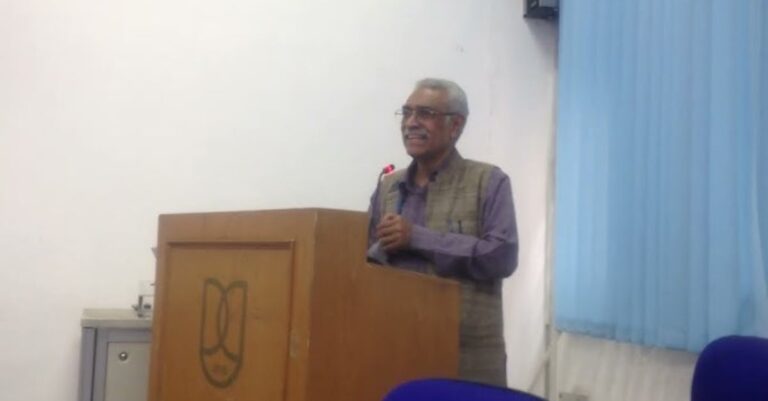
On 21st January 2026, Free Voice successfully organized a commemorative program to mark the 129th birth anniversary of the iconic freedom fighter, Subhas Chandra Bose, fondly revered as Netaji. The event provided a platform for intellectual reflection on his multifaceted legacy and was attended by an engaged group of students and teachers.
The program featured insightful speeches from three distinguished speakers:
Debdas Majee, a school teacher and lifelong admirer of Netaji, opened the discourse. He highlighted Netaji’s profound spirituality, which manifested from his youth in an admiration for the sanyasi (ascetic) lifestyle, remaining a core aspect of his identity as a pious Hindu. He elaborated that this personal faith was the foundation for Netaji’s deep respect for all religions, viewing pluralism as the heart of Indian values. Furthermore, he emphasized Netaji’s sacrifice for achieving freedom for the country, his commitment to scientific temper, modern education, and his life’s philosophical mission: the eradication of poverty, wherein he saw the truest embodiment of humanity.
Abu Siddik, Editor of Free Voice, a college professor and a writer, delivered a reflective and prescriptive address. He presented Netaji as the ideal politician, whose unique blend of courage, strategic acumen, and uncompromising honesty allowed him to steer masses toward progress. He noted that Netaji’s respectful divergence from Mahatma Gandhi on methods, while sharing the ultimate goal, offers a powerful model of democratic disagreement for contemporary politics. He compellingly argued that Netaji’s lofty ideals of integrity and purposeful leadership are crucial for the growth and development of today’s youth.
Zeeshan Husain, a budding sociologist, offered a unique analysis through the lens of cinema. He discussed Shyam Benegal’s seminal film, Bose: The Forgotten Hero (2004), first contextualizing Benegal’s role in Parallel Cinema. Husain pointed out how the film sensitively portrays Netaji’s commitment to secularism, showcasing his trust in Muslims and Sikhs by appointing them to key positions in the Indian National Army (INA). He also highlighted the film’s depiction of Netaji’s progressive vision for gender equality, evidenced by the formation of the Rani Lakshmibai Regiment, and his relentless, often diplomatically fraught, efforts to secure international support for India’s freedom. He asked students to listen to Sugata Bose’s speeches over YouTube to understand Netaji more deeply.
The lecture session was followed by a vibrant interactive segment where the participating youth posed fascinating and thoughtful questions. The program concluded on a forward-looking note, with the collective pledging to institutionalize this commemoration as an annual event to continually draw inspiration from Netaji’s life and work.
What is remarkable about this online celebration of Netaji’s birthday is that even today our youths are enthusiastic to understand more and more deeply his life and work. They get inspired, motivated by Netaji’s sacrifice for securing freedom for that India where there was no wall in the name of religion, language, gender, caste or creed.
The programme ended with a vote of thanks by one of the participants, Mohammad Jahir.