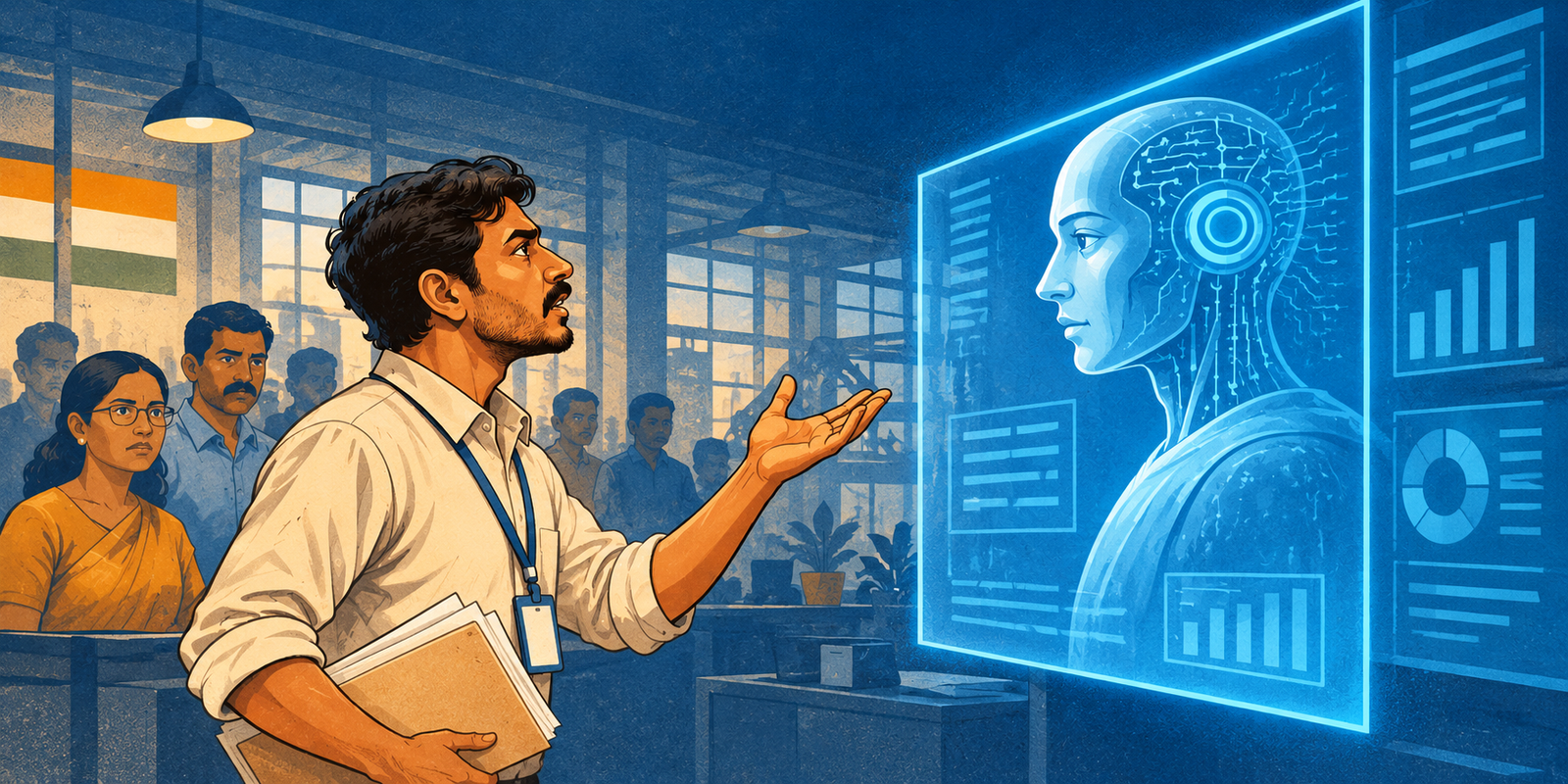

An employee should be able to tell a manager that an AI recommendation is wrong without first proving that the entire technology is useless. As employers adopt more capable systems, that simple principle deserves a place in their operating rules. A worker who points out a missing fact should receive an answer from someone with the authority to change the decision.
India’s November 3 announcement of EKA-1 and the Dhīr models expands the discussion about homegrown AI. The government describes these models as supporting Indian languages and addressing uses across business and public services. The opportunity deserves attention. So does the question of how organizations will use the knowledge of employees who understand the people and situations behind an apparently complete answer.
A multilingual interface can make a tool easier to approach. It cannot settle a disagreement about an employee’s responsibilities, a customer’s circumstances, or the meaning of an incomplete record. Those disagreements require people who can examine evidence and accept responsibility. Companies should decide how that will happen before managers begin relying on the output.
Consider a hypothetical performance summary assembled from sales records. A worker spent several weeks helping new colleagues handle difficult customers, but those contributions never entered the reporting system. The resulting summary describes a decline in individual output. Its sentences may accurately reflect the records provided while giving the manager an incomplete picture of the work. Asking the same tool to rewrite its explanation will not restore information it never received.
The employee needs a practical way to supply that missing context. The manager should explain which records informed the assessment, hear the objection, and decide whether the conclusion changes. If the manager cannot identify the basis for a consequential recommendation, that recommendation needs further examination before it determines an outcome. Calling an employee resistant to change avoids the question the employee has raised.
The scale of workplace exposure makes this a management issue worth addressing now. The International Labour Organization’s 2025 analysis of generative AI and jobs estimates that one in four workers worldwide holds an occupation with some exposure to the technology. That estimate measures potential exposure, rather than actual job losses. The study emphasizes how many jobs contain tasks that still require human involvement. Employers have choices about how to organize that combination.
Start by naming the person who will hear a concern. A policy that says employees may raise questions offers little help if everyone assumes another department will answer. The responsible manager should have enough authority to pause use of a disputed output, obtain the relevant information, and explain the decision. Employees should know where to go if that manager cannot resolve it.
Keep the process usable during an ordinary working day. An employee should be able to identify the disputed recommendation, explain the missing or incorrect information, and show the supporting record. They should not need technical knowledge about the model to describe a problem in their own work. The organization can investigate the technical cause after it understands the practical consequence.
Managers should also separate disagreement from misconduct. An employee may have misunderstood an output, just as a supervisor may have relied on a poor one. Ask what happened before assigning blame. When a worker raises a concern in good faith, explain the outcome and the reason. A process that punishes people for unsuccessful objections will hear less about the mistakes that remain hidden.
There is a reasonable concern about delay. A small company cannot hold a lengthy hearing over every suggested sentence. Match the process to the consequence. An awkward internal draft can be corrected quickly by its owner. An output that influences a performance assessment deserves a documented response from the manager responsible. A short, clear route for handling the second case can prevent repeated arguments after the decision has already affected someone.
Learn from the concerns together. If employees repeatedly identify the same missing source, fix the information supplied to the tool. If the output encourages a misleading comparison, change the task or stop using it for that purpose. Share the practical lesson with the people affected. Do not turn the record of objections into a ranking of which workers support the technology most enthusiastically.
India’s investment in AI can support useful changes in how people work. Employers will influence those results through the choices they make after a model becomes available. At the next adoption meeting, ask who can challenge an output, who must answer, and how a justified objection will change the work. Give employees a clear answer before asking them to trust the system.
Gleb Tsipursky, PhD, a behavioral scientist, CEO of Disaster Avoidance Experts, and author of The Psychology of AI Adoption at Work: From Resistance to Results (Georgetown University Press, 2026).