
Film: Bose: The Forgotten Hero (2004).
Dir. Shyam Benegal. 3hr 28min.
Introduction:
Come to Kolkata and take a walk to any locality and in few minutes you must be seeing a portrait or a statue of Subhas Chandra Bose. Fondly called ‘Netaji’, his posters and busts are sprinkled across the lanes and by-lanes of Kolkata across localities. Netaji adores not only the city Kolkata but also the towns and even villages of West Bengal. This way Netaji is as popular as Rabindranath Tagore, Jawaharlal Nehru and MK Gandhi. Not only political parties, but also small shopkeepers hang Netaji’s pictures. It was this astonishing presence of Netaji that intrigued me to dig deeper into his persona.
SC Bose and India’s Struggle against Empire:
Subhas Chandra Bose is a national hero who laid down his life fighting for the freedom of our country. Distinguished historian Irfan Habib in his lecture titled The Extraordinary Legacy of the INA (2025) notes that Netaji was one of the most important leaders of the Indian National Congress alongside Gandhi and Nehru. Today one of the greatest historians working on the life and times of SC Bose is Sugata Bose. Sugata Bose regularly speaks on contemporary relevance of Netaji’s ideals and his speeches are freely available on YouTube. He also maintains Netaji Bhawan (museum) in Kolkata.
Cast and Crew of the movie:
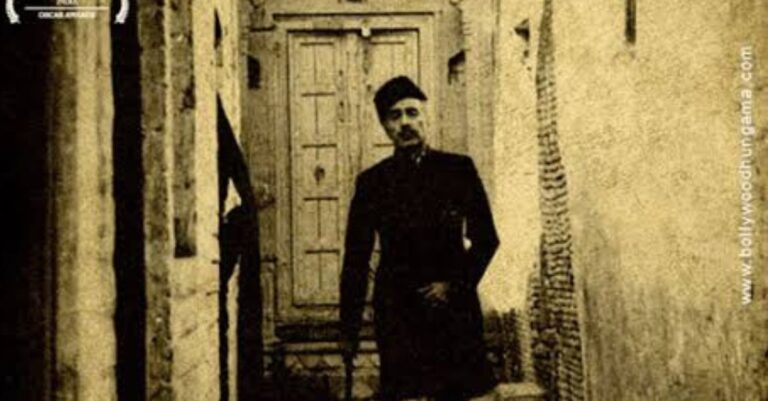
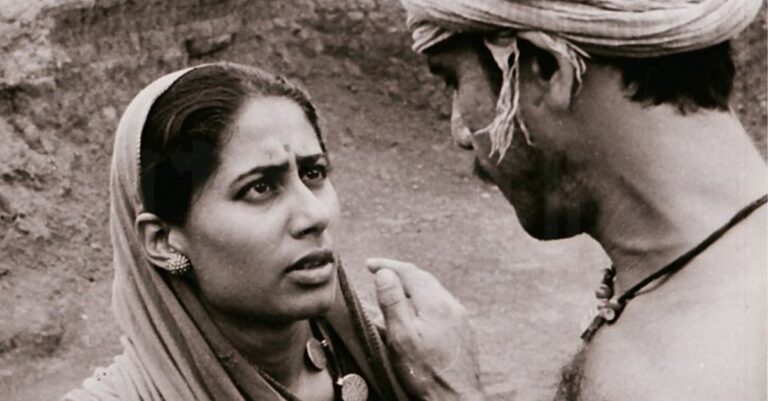
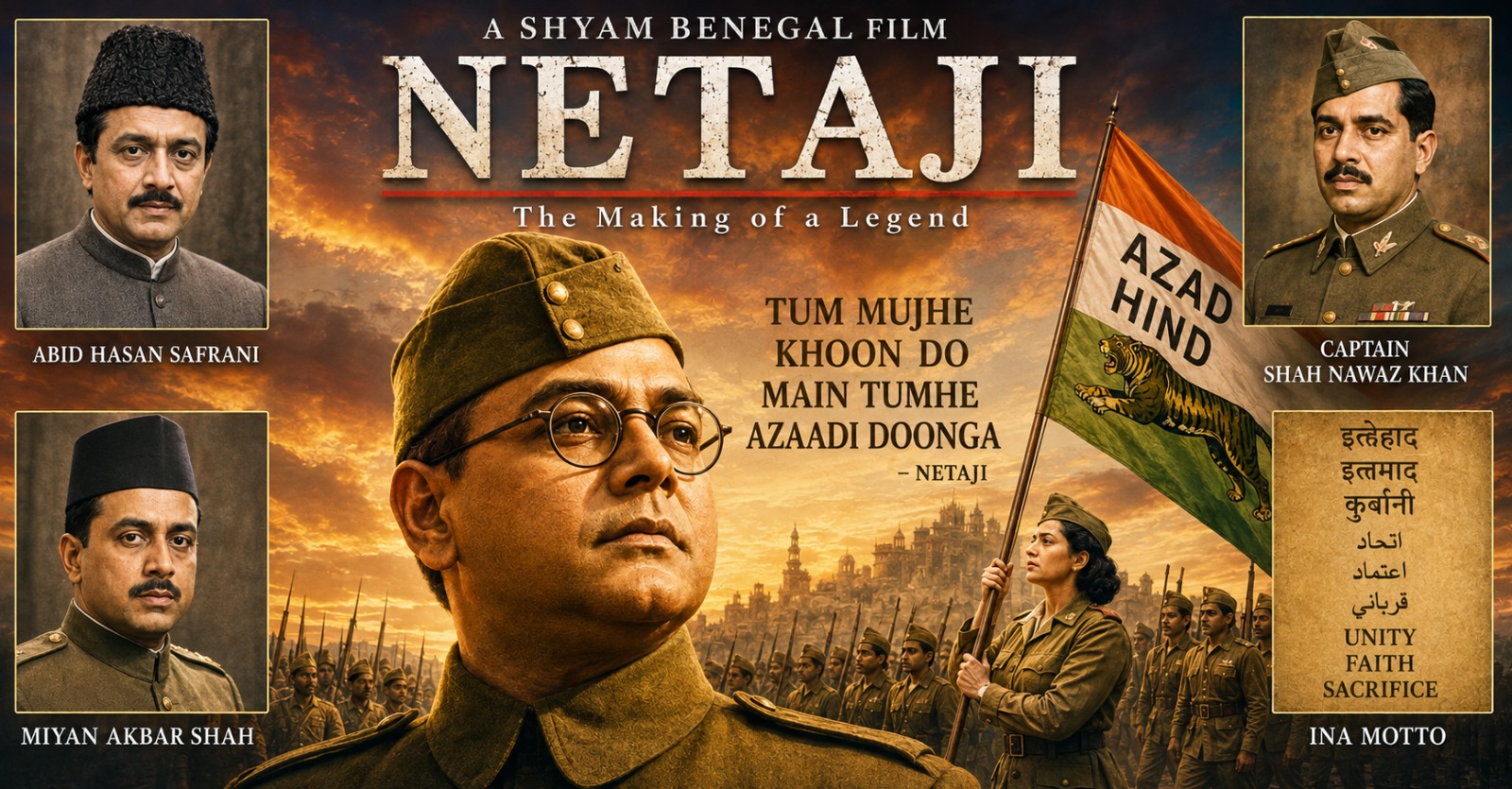
Bose: The Forgotten Hero (2004) is directed by Shyam Benegal. Benegal was an icon of Parallel Cinema and has directed docu-series like Bharat Ek Khoj (1988) and Samvidhan (2014). He has also directed classics like Manthan (1976), Nehru (1984), Suraj Ka Satvan Ghoda (1992), Mammo (1994) among others. Sachin Khedeker must be applauded for doing justice to the role of SC Bose. Dialogues and research by Shama Zaidi and Atul Tiwari are just as compelling. Costumes by Pia Benegal look natural. However, it is the song kadam kadam badhiaye ja, khushi ke geet gaye ja which is still getting played year after year on Netaji’s birth anniversary on 23rd January. This lyrics is by Javed Akhtar and the music is composed by AR Rahman.
Plot: Spanned into 3hr 30 mins, the film covers the life of Netaji from his hunger strike in Presidency Jail in 1940 to the Independence of India in 1947. It also shows Bose-Gandhi differences over the strategy for the freedom struggle during the Tripuri Congress in 1939. Despite this, both respected each other till their last. The film has three parts named after the three mottos of Indian National Army (INA): Etmad, Ittefaq, and Qurbani.
In the first part titled Etmad (Vishwas or Faith) the story is about convincing potential allies to help India win freedom. We are shown his ‘Great Escape’ with the help of his nephew Sisir Bose and his close aide Miya Akbar Shah. His imposter was Mohammad Ziauddin and he reached Kabul in January 1941. He wanted to ally with Russia but was not allowed due to war. Out of compulsion, he had to ally with Nazi Germany.
The second part titled Ittefaq (Ekta or Unity), is about Netaji’s desire to convince Nazi officials in Germany to support freedom struggle and his own plans to build INA. He meets Abid Hasan, Swamy and Nambiar in Berlin in 1941. All three played major roles in establishing INA. Bose forms Azad Hind Fauj (AHF) whose flag is tricolour with tiger as central symbol. Its slogan becomes ‘Jai Hind’. Sadly, Germany invaded Russia which stalled his plans to lobby with Russia. In 1942, Indian National Army was formed in presence of elderly Rashbehari Bose. Slogans of ‘Vande Matram’ and ‘Jai Hind’ were raised.
It was during this time that he married the love of his life Emilie Schenkel; today their daughter Anita Bose-Pfaff is active in public life. In February 1943, Bose along with Abid Hasan took u-boat from Germany and reached Indonesia in May 1943. There they met Japan’s Prime Minister Tojo and convinced him to fight the British together. In Singapore in July 1943, Netaji raised the slogan in front of the INA army- ‘Give me Blood, I will give you freedom’.
Qurbani (Balidan or Sacrifice) is the final part. In October 1943 Japan recognised Azad Hind government. Bose named three brigades of INA as Nehru, Gandhi and Azad. He also formed an all-women Rani Jhansi brigade headed by Dr. Laxmi Swaminathan. In April 1944, INA succeeded in hoisting national flag near Imphal. Sadly, INA had to bite dust while battling around Chindwin river (Feb 1945) and Mount Popa (Mar 1945). It was during this crucial period that US dropped atom bombs on Japan. Netaji decided to disband army. On 17th Aug 1945, he took flight from Saigon airport along with Habib; the plane gets crashed and Netaji dies. Captain Shah Nawaz Khan, Capt BK Saigal, and Dhillon get captured and face trial in Delhi bravely.
Film ends by stating that though Netaji was not alive on 15th Aug 1947 his work definitely accelerated the freedom struggle.
Contemporary relevance of Netaji:
For last decade or so, India is going through a difficult phase in its history. People are distorting his ideas deliberately. Taking stock of current situation, it is urgent to relook at Netaji’s ideals of religious pluralism, gender justice and socialist principles. Had he been alive during the mid 1940s, he would have never allowed partition of India. His idea of India was a land of multiple religions and multiple languages; a land with economic justice and gender equality. Today we all need to promote his ideals in our lives. That will be fitting tribute to his martyrdom.