
By Dr Anand Teltumbde
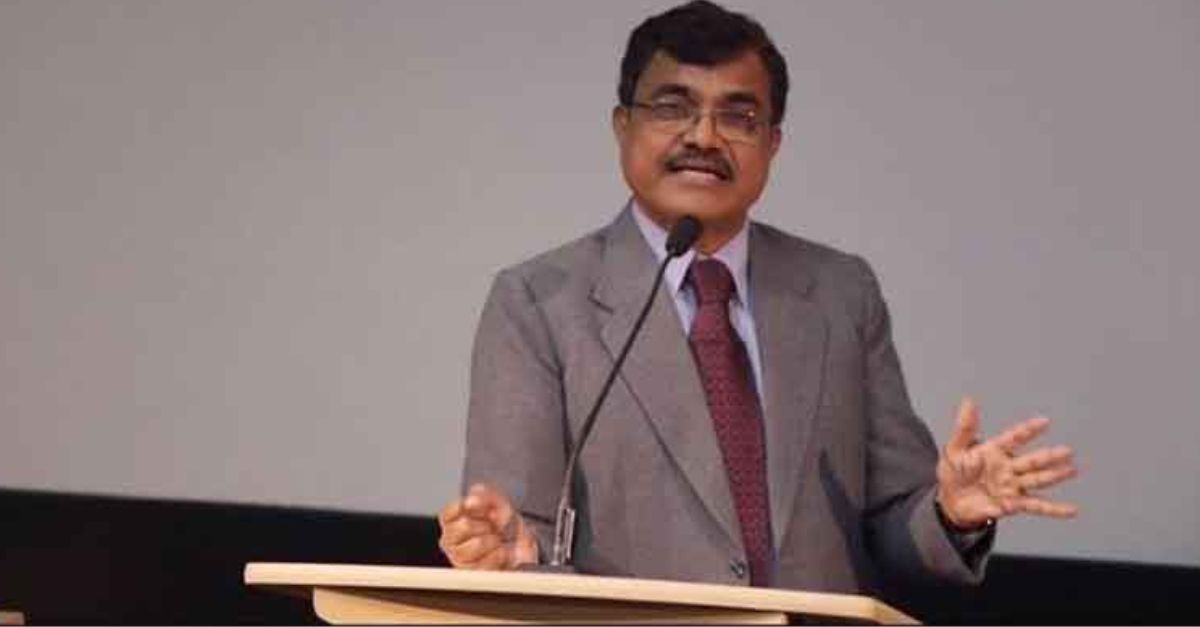
Abridged and edited speech delivered online on 4 June 2026 to the CPM-organised camp for activists at Kavathe Village in Sangli District
Comrades, I deeply regret being unable to attend in person, due to my spinal injury. It would have been risky for me to undertake more than ten hours road journey. Therefore, in consultation with the organisers, I decided to speak with you online.
Before turning to the main topic, I want to clarify my own stance. I am not a politician; my role is that of a public intellectual. A public intellectual’s sole duty is to speak the truth fearlessly — even if the entire world stands in opposition. So, I cannot guarantee my speech will necessarily please you. Today, as public discourse increasingly rewards transient popularity over the search for truth, self-introspection and self-criticism become imperative. We face not merely a temporary political setback but a comprehensive existential crisis that demands a willingness to re-examine long-held certitudes.
Annihilation of Caste and Class Struggle: Why Raise This Question Today?
Two fundamental contradictions surround this topic.
The first is what I call the conceptual synthesis fallacy. Annihilation of caste is traditionally linked to Babasaheb Ambedkar, and class struggle to Karl Marx. Combining the two often leads to the casual assumption that slogans like “Jai Bhim – Lal Salaam” represent a genuine synthesis of Ambedkarism and Marxism. I do not subscribe to this view though many people erroneously attribute this slogan to me. The second is a political divergence from core goals: in contemporary political reality, neither Ambedkarite nor Marxist politics actually prioritizes these questions the way their founders intended.
In Ambedkarite politics, the agenda of caste annihilation has largely devolved into caste-identity politics. Rather than striving to erase caste, practice today centers on asserting, recognizing, and even glorifying caste identities. While public respect for Ambedkar has undeniably grown, it is often reduced to symbolic expressions — statues, slogans, ritual invocation — rather than genuine engagement with his radical critique of the caste system. A prime example is the contemporary dispute over sub-categorization of the Scheduled Castes. While Dalits fight one another internally over how a pool of reservation quotas should be divided, the systemic changes that are shrinking that pool in the first place — the contraction of public sector employment, neoliberal privatization, Economically Weaker Sections (EWS) quotas, lateral entry into the bureaucracy — go largely unresisted. Conflict intensifies over the shrinking pie, while the structures that are shrinking it remain unchallenged.
Similarly, Marxist politics underwent a major shift after the Telangana armed struggle, moving decisively toward parliamentary politics. To survive electorally, it compromised with existing social realities — particularly caste. Class terminology was retained in speech and program, but caste was accommodated for electoral pragmatism rather than genuinely incorporated into a rigorous theoretical framework of class struggle. In practice, this meant caste was managed, not analyzed. I am not necessarily against the parliamentary path. But as communists they should have worked to awaken masses to its limits. For instace, they could raise genuine issues such as the First-Past-the-Post system that reduced Indian democracy to a virtual plutocracy and now to a fascist system. They should have exposed how the present state is essentially the continuation of the colonial state with camouflage of republicanism. There are many such issues which could have been taken up for mass mobilisation. But they haven’t.
Reopening this question of caste annihilation and class struggle is not about lazily speaking about blending or merging one ideology into the other. It is about understanding how the emancipatory impulse present in both—Ambedkarite and Marxist traditions became attenuated over time, and asking how it might be reinvigorated today.
Why Is the Annihilation of Caste Necessary?
Caste is not merely a mechanism of oppression directed against Dalits; it is the single greatest structural obstacle to India’s progress. In his 1853 essay, The Future Results of British Rule in India, Karl Marx put it that way. He observed that modern industry, resulting from the railway system, would dissolve the hereditary divisions of labour upon which the Indian castes rest — those “decisive impediments to Indian progress and Indian power.” This problematization of caste is perhaps precedes any anti-caste impulse was born in India even among its victims.
Anti-Marx critics jump to conclude that Marx was proved wrong since caste has persisted regardless of the growth of railways and industrialization. This is a superficial reading. Marx’s core insight was not predictive that caste would disappear, but rather the recognition that caste is a decisive impediment to progress. Marx understood that capitalism, by its nature, requires a free labour market, mobility of skill, and fluid exchange — whereas caste relies precisely on a hereditary, fixed division of labour. Capitalism, however, piggy backing colonialism (and not fighting feudalism as in Europe) might find certain features of caste to its own advantage.
Capitalism and the Dialectical Transformation of Caste
Capitalism did not destroy caste, nor did it leave caste untouched. Caste is a complex system that encompasses the entire life world of the people in the subcontinent. Capitalism weakened the elements of this system that hindered capital accumulation, while simultaneously preserving — and even restructuring — the elements that aided it.
Consider merchant communities. In pre-capitalist India, merchant sub-castes maintained strict ritual and social boundaries. As modern banking, railways, and long-distance trade expanded, maintaining these rigid divisions raised transaction costs. Consequently, occupational barriers dissolved within commercial spheres even as endogamy and familial caste structures persisted. Merchant groups — Marwaris, Chettiars, Bania networks — used caste ties and mutual trust to lower risk and transaction costs; access credit, and build trading networks before formal market infrastructure existed. In this process, caste was transformed from a purely ritual system based on purity into an economic resource based on trust.
Consider occupational and urban dynamics. Modern industry demanded skill rather than birthright, which hastened the decay of the traditional Jajmani system of hereditary service relations. Urbanization and factory production forced people of different castes into daily co-working, rendering traditional physical untouchability economically irrational within production settings. Thus, generally those castes in urban areas that interfaced with capitalist relations were impacted and had to adjust themselves, relaxing ritual boundaries.
Yet caste adapted rather than dissolved. Endogamy in particular largely survived, because it kept capital, property, and business networks concentrated within defined communities. Castes, despite British effort to rigidify them with the instruments like caste census, were weakening in their ritual form. However, after 1947, paradoxically while constituting the ‘republican’ state, the former feudal caste system was transplanted into constitutional modernity, producing what might be called “constitutional castes.” Today, caste operates less through the old idiom of religious purity and pollution, and more through structural control over capital, education, markets, state power, and social networks.
What Is Caste? Beyond the Ritualistic Definition
Most historical attempts to defeat caste achieved only partial success, because each targeted a single dimension of what is in fact a multidimensional system. Buddhism challenged caste’s religious and moral legitimacy. The Bhakti movement attacked its cultural and Brahminical dominance. Babasaheb Ambedkar mounted a near comprehensive assault on its ideological, legal, and political pillars. Marxism focused primarily on its economic dimension — exploitation and class ownership. Because each movement targeted specific facets, the dimensions left unaddressed simply reconstructed the system around the gains that had been made elsewhere.
It must be recognised that to eliminate caste, it must be combated simultaneously across all of its primary dimensions:
- Religious — scriptural justification, through concepts like karma and the purity/pollution binary.
- Cultural — customs, folklore, and language that transmit caste identity across generations.
- Psychological — internalized feelings of superiority or inferiority.
- Economic — monopolization of land and capital, and discrimination within labour markets.
- Political — vote-bank consolidation and administrative representation.
- Social — endogamy, residential segregation, and enforced social distance.
Varna and Caste: Concepts and Social Reality
Varna and Caste (Jati) are frequently conflated, but they represent genuinely distinct phenomena. Varna is an ideological construct derived from Brahminical scriptures — an idealized, four-tiered blueprint of how society ought to be structured. Jati, or caste, is the concrete social reality: individuals actually live, marry, work, and face discrimination on the basis of specific castes — Mahar, Chitpavan, Jat, Matang — not abstract Varna categories.
Varna supplied the theology of inequality; Jati supplied its sociology. While other ancient societies had their own birth-based hierarchies, India’s particular uniqueness lies in the combination of Varna theology, thousands of endogamous Jatis, entrenched norms of pollution, and centuries of systemic social reproduction.
Anti-Caste Struggles: Lessons from History
A careful review of history demonstrates that single-front struggles are insufficient. Buddhism lacked a corresponding radical restructuring of social and economic relations. Bhakti was, over time, re-absorbed into caste frameworks rather than dissolving them. Ambedkar’s constitutional protections and political rights were essential for representation, but they left the fundamental economic structures and ownership of the means of production largely intact. Marxist movements, for their part, treated caste as a mere superstructural or “secondary” contradiction — which allowed caste dynamics to persist even within their own organizations.
The general pattern is this: if one dimension changes, the others preserve the system. If religion changes, culture preserves caste. If culture shifts, the economy reproduces it. If the economy changes, politics reorganizes it around the new configuration.
Annihilation of Caste and Revolution: Mutually Necessary Preconditions
A multidimensional system of this kind cannot be dismantled through piecemeal legal reforms, symbolic gestures, or election victories alone. It requires a radical transformation of the entire social structure, which is what is called a revolution.
That is the reason, I proclaimed long ago, “The annihilation of caste is impossible without revolution, and revolution is impossible without the annihilation of caste.” Revolution is necessary for caste annihilation because caste is woven into the economic, state, social, and cultural fabric of society at every level. Caste annihilation is, in turn, necessary for revolution because genuine working-class unity cannot be forged while the working class itself remains fragmented along caste lines.
A revolution that ignores caste risks becoming a mere transfer of power at the top, one that leaves the underlying dominant social hierarchies fully intact. Conversely, an anti-caste movement that ignores economic and state structures can treat the symptoms of caste but cannot halt its systemic reproduction.
Class Struggle as the Vehicle of Revolution as well as Caste Annihilation
Marx’s core contribution to social thought was not a set of immutable dogmas, but a scientific, dialectical method for analyzing society. Treating his nineteenth-century conclusions as timeless, fixed truths actually violates Marx’s own method. Today’s world — shaped by artificial intelligence, digital surveillance, automation, and platform capitalism — is fundamentally changing the labour process, the composition of classes, and the way value itself is created. Our task is to apply Marx’s method to these new conditions, rather than simply repeating historical formulas developed for a different era as meaningless mantras.
Reconsidering the Concept of “Class”
Marx and Engels famously wrote in The Communist Manifesto that the history of all hitherto existing society is the history of class struggles. It implies that class incorporates all other social cleavages. Class is not a static, pre-existing object waiting to be discovered; it is a theoretical abstraction we deploy to analyse real, concrete social relations.
In India, class relations were historically constructed through caste, not alongside it. Land ownership, the division of labour, wage disparities, and control over economic resources were all explicitly organized along caste lines. Class in India is therefore not an alternative category to caste, competing with it for analytical priority. It is, rather, totality of all social relations of exploitation that determines classes. To exclude caste or for that matter, any actual socially salient identities, from class analysis, is in fact a rejection of historical materialism itself. Marx named proletariat and bourgeoisie as the antagonistic classes in an ideal capitalist mode, not the actually existing mode of production anywhere.
Reformulating Class Struggle
In contemporary India, class relations are deeply intertwined with patriarchy, caste, religious polarization, and environmental degradation. The traditional concept of a single “principal contradiction,” to which all other struggles are subordinated as secondary, oversimplifies these complex and overlapping realities. Those who are obsessed to valorise economics must see that none of these categories are devoid of it.
Multiple structural contradictions operate simultaneously and continually reinforce one another. The real task, then, is not to search a priori for principal contradiction above all others, but to understand how these varied contradictions interconnect and feed into each other. Class struggle must be reformulated to explicitly encompass the anti-caste movement, anti-majoritarian movement, anti-gender movement, agrarian movements, environmental resistance, and struggles for democratic rights — not as separate allies of convenience, but as constitutive parts of the class struggle.
From Theory to Practice
The greatest crisis facing progressive movements today is ideological fragmentation. Individual movements operate largely in silos: labour movements focus strictly on union wages; farmers’ movements focus on remunerative prices; Dalit movements focus on caste atrocities and identity; feminist movements focus on patriarchy; environmental movements focus narrowly on ecological issues. While each of these struggles is vital in its own right, fighting them in isolation allows the overarching, unified system of exploitation to remain intact and unchallenged.
The objective, then, is to integrate all these elements fighting against the dominant system into a class and to build a shared historical understanding that links them together as interconnected fronts against the same underlying system, as integral part of the class struggle.
A New Concept of the Transformative Organization
Revolutionary party models built for twentieth-century conditions must adapt to today’s realities. A modern transformative organization should feature, first, an organismic structure: local units and movements operating like interconnected biological cells, each possessing genuine local initiative while still aligning with a shared strategic vision. Second, decentralized coordination: central committees acting as trustees of ideology, long-term strategy, and overall coordination, rather than functioning as top-down command structures issuing orders. Third, continuous learning: the movement must be capable of ongoing self-examination and adaptation, since dogmatic adherence to fixed formulas inevitably leads to isolation and irrelevance. Fourth, broad intervention: the organization must actively engage across all popular struggles — labour, caste, gender, ecology, and democratic rights — fostering genuine unity without usurping the local autonomy of any one movement.
Changing Capitalist Reality and New Challenges
Rapid technological transformation — artificial intelligence, big, data, algorithms, automation, robotics — is restructuring the working class itself, changing the very nature of value creation, and redefining the exercise of state power. To remain genuinely faithful to both Marx and Ambedkar, we must embrace their critical methodologies rather than uncritically repeating their specific historical conclusions as if frozen in time. The central question facing us today is not “Marx and/or Ambedkar,” posed as a binary choice, but rather how we make use of their –or for that matter, any other’s analytical tools together to critique and transform contemporary society. The world is changing with increasingly accelerated pace and task before us to keep pace with it with dynamic changes in our arsenal and strategies.
Conclusion: Toward a New Revolutionary Journey
India today faces a multidimensional crisis marked by expanding economic inequality, eroded democratic institutions, heightened religious polarization, and continuously restructured caste mechanisms. The basic classes are facing existential crises and look dormant without any hope. Meeting these challenges with century-old responses, unchanged and unexamined, is simply insufficient.
Transformative movements must cultivate the courage for genuine self-criticism. Admitting past mistakes, abandoning outdated assumptions, and adapting seriously to contemporary realities are essential signs of a movement’s continued vitality — not signs of weakness. The future of transformative politics ultimately depends on the critical intellect, creativity, and commitment of the rising generation.
I can only hope that you will think through this and more to prepare yourself for this new revolutionary journey.
(First published in Countercurrents)